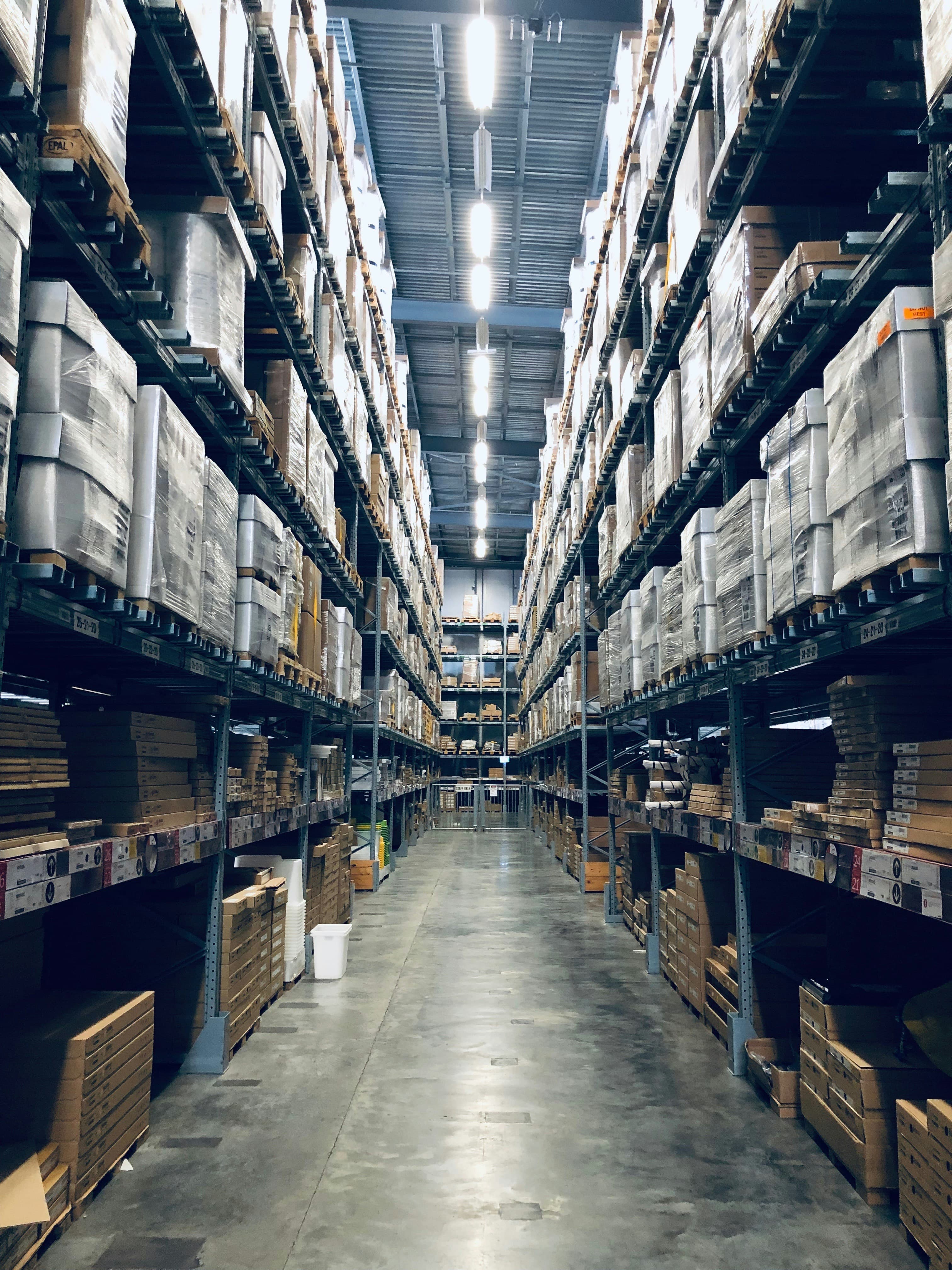
Quick Answer: B2B 3PL services handle wholesale fulfillment to retailers and distributors — including EDI integration, routing guide compliance, pallet shipping, and chargeback prevention. Unlike D2C fulfillment, B2B requires strict adherence to retailer specifications for labeling, packaging, and documentation. Brands expanding into retail distribution need a B2B fulfillment partner with proven experience shipping to major retailers.
At 3PLGuys in Paramount, CA, we handle B2B fulfillment with dedicated account managers, >99% order accuracy, and experience shipping to major retailers. Flexible terms, no long-term contracts.
If you're selling direct-to-consumer and a major retailer wants to stock your products, you've hit a milestone. You've also entered a fulfillment world with entirely different rules. B2B 3PL services exist specifically to navigate this complexity — handling the routing guides, EDI transactions, pallet specifications, and compliance requirements that retailers demand.
This guide covers everything brands need to know about B2B fulfillment services: what they include, how they differ from D2C, and how to choose a wholesale 3PL that won't cost you money in chargebacks.
What Are B2B 3PL Services?
B2B 3PL services are third-party logistics solutions designed for business-to-business fulfillment — shipping bulk orders to retailers, distributors, and other businesses rather than individual consumers. These services handle the specialized requirements of wholesale distribution that standard e-commerce fulfillment can't address.
A B2B-focused 3PL provides:
- EDI integration — Electronic data interchange for purchase orders, advance ship notices, and invoices
- Routing guide compliance — Following retailer-specific shipping, labeling, and packaging requirements
- Pallet and case-pack fulfillment — Building pallets to spec, floor loading, mixed-SKU handling
- GS1-128 labeling — Compliant carton and pallet labels with SSCC barcodes
- Freight coordination — LTL and FTL shipping to retailer distribution centers
- Chargeback prevention — Systems and processes that prevent compliance violations
The core difference from D2C fulfillment: B2B 3PL services optimize for compliance and accuracy over speed and customer experience. When you're shipping pallets to Walmart's distribution center, no one cares about branded tissue paper. They care that your ASN matches your physical shipment exactly.
Why Brands Need B2B Fulfillment Partners
Expanding into wholesale sounds straightforward — ship bigger orders to fewer customers. The reality is more complex.
Retailer Requirements Are Non-Negotiable
Every major retailer publishes detailed requirements for how vendors must prepare and ship orders. Walmart's routing guide is over 200 pages. Target's vendor requirements include specific label placement measured in inches. Amazon Vendor Central has its own set of standards.
These requirements cover:
- Which carriers you must use
- How cartons must be labeled and where labels must be placed
- How pallets must be built (stack pattern, height, wrapping)
- When and how EDI documents must be transmitted
- What happens if you violate any specification
"Close enough" doesn't exist in B2B fulfillment. A label placed two inches lower than specified triggers a chargeback. An ASN transmitted after your shipment arrives triggers a chargeback. Shipping 498 units when the PO said 500 triggers a chargeback.
The Financial Stakes Are Higher
D2C fulfillment errors affect individual customers. B2B fulfillment errors affect entire purchase orders worth tens or hundreds of thousands of dollars.
Chargebacks — financial penalties for compliance violations — typically range from 1% to 5% of invoice value per violation. Walmart's OTIF (On-Time In-Full) program charges 3% of item value for late or incomplete shipments. Stack a few violations on a $50,000 order and you've lost $2,500 in penalties before accounting for freight costs or margin.
Repeated violations lead to worse outcomes: vendor probation, required use of expensive carriers, or termination of the retailer relationship entirely.
Specialization Matters
The skills that make a 3PL excellent at D2C fulfillment don't transfer to B2B. High-volume single-unit picking, parcel carrier optimization, and beautiful unboxing experiences are irrelevant when you're building pallets for a Costco distribution center.
B2B 3PL services require different capabilities:
- EDI systems that integrate with retailer requirements
- Staff trained in pallet building and case-pack configurations
- Freight relationships with LTL and FTL carriers
- Experience with specific retailers and their quirks
- Quality control processes that catch errors before they ship
Using a D2C-focused 3PL for wholesale usually results in compliance failures, chargebacks, and damaged retailer relationships.
B2B vs D2C Fulfillment: Key Differences
Understanding the operational differences between B2B and D2C fulfillment clarifies why specialized B2B 3PL services exist.
| Aspect | D2C Fulfillment | B2B Fulfillment |
|---|---|---|
| Order Size | 1-5 items per order | Cases, pallets, truckloads |
| Customers | Individual consumers | Retailers, distributors |
| Shipping | Parcel (FedEx, UPS, USPS) | Freight (LTL, FTL) |
| Packaging | Branded, consumer-facing | Industrial, spec-compliant |
| Compliance | Minimal (valid tracking) | Extensive (routing guides, EDI) |
| Penalties | Refunds, reviews | Chargebacks, account termination |
| Success Metrics | Speed, experience | Accuracy, compliance |
| Documentation | Shipping label, packing slip | ASN, BOL, GS1-128 labels |
| Delivery | Residential addresses | DC loading docks |
| Returns | Consumer returns flow | RMA processes, damage claims |
The comparison reveals why attempting B2B fulfillment with D2C infrastructure typically fails. The operational priorities, systems, and expertise are fundamentally different.
Requirements for B2B Fulfillment
Successful B2B fulfillment services must address several interconnected requirements. Missing any one creates compliance gaps.
EDI Integration
EDI (Electronic Data Interchange) is the standard language for B2B transactions. Major retailers won't work with you without EDI capability.
The core EDI transaction sets for wholesale:
- EDI 850 — Purchase Order (retailer sends you an order)
- EDI 855 — Purchase Order Acknowledgment (you confirm receipt)
- EDI 856 — Advance Ship Notice/ASN (you notify what's shipping)
- EDI 810 — Invoice (you bill for the shipment)
The ASN (856) is the most critical and error-prone document. It must be transmitted before your shipment arrives and must match the physical shipment exactly — every carton, every SKU, every SSCC number. Mismatches trigger chargebacks.
A B2B 3PL with proper EDI integration:
- Receives warehouse orders and creates orders in their WMS automatically
- Generates compliant labels with correct SSCC numbers
- Transmits ASNs with accurate carton-level detail before shipment leaves
- Maintains retailer-specific configurations for formatting requirements
Manual EDI processes — re-keying purchase orders, manually creating ASNs — introduce errors and delays. Automation is essential.
For a deeper dive on EDI requirements, see our EDI integration guide.
Routing Guide Compliance
Every major retailer publishes a routing guide specifying exactly how vendors must prepare and ship orders. These guides are dense, detailed, and change periodically.
Routing guides typically cover:
Carrier requirements
- Approved carriers for different shipment sizes
- How to book freight appointments
- Lead time requirements
Labeling standards
- GS1-128 barcode specifications
- Label placement (often retailer-specific locations)
- Human-readable text requirements
- Print quality standards (smudged labels get rejected)
Packaging specifications
- Approved carton dimensions
- Weight limits per carton
- Pallet specifications (type, height, weight)
- Wrapping requirements (layers, corner boards, top sheets)
Documentation
- Bill of lading requirements
- Packing list format
- ASN timing and content
A B2B 3PL must have systems for managing multiple routing guides simultaneously. When you ship to Walmart, Target, and Amazon Vendor Central, each has different requirements. The 3PL needs to apply the correct specifications automatically based on the destination.
Pallet and Case-Pack Shipping
D2C fulfillment involves individual items in parcel packages. B2B fulfillment involves cases and pallets shipped via freight carriers.
Case-pack configurations Retailers order in case packs — standardized units containing multiple items. Your case-pack configuration (units per inner pack, inners per case) must match what's in the retailer's system. Mismatches cause receiving issues and chargebacks.
Pallet building Pallets must be built to retailer specifications:
- Pallet type (usually GMA standard 48"x40", but varies)
- Stack pattern for cases
- Maximum height and weight
- Corner boards and stretch wrap requirements
- Mixed-SKU pallet rules (if multiple products on one pallet)
Floor loading Some retailers require floor-loaded shipments (loose cases stacked in the trailer) instead of palletized. This increases handling complexity.
A B2B fulfillment partner needs staff trained in pallet building, equipment for stretch wrapping and labeling, and quality control processes to verify pallets meet specifications before shipping.
Appointment Scheduling and Freight
B2B shipments don't go to residential addresses — they go to distribution center loading docks with scheduled appointment windows.
Miss your appointment time, and several things can happen:
- Your shipment gets rejected and returned (you pay freight both ways)
- You pay detention fees while the truck waits
- The retailer charges for missed appointments
A B2B 3PL must coordinate appointment scheduling, often booking days or weeks in advance during peak periods. They also manage carrier relationships to ensure reliable pickup and delivery.
Freight options include:
- LTL (Less-Than-Truckload) — Shared trailer space for smaller shipments
- FTL (Full Truckload) — Dedicated trailer for large shipments
- Intermodal — Rail combined with truck for longer distances
The 3PL should optimize carrier selection based on shipment size, timing, and cost.
How to Choose a B2B 3PL Partner
Not every 3PL can handle wholesale fulfillment. When evaluating B2B 3PL services, focus on specific capabilities.
Essential Capabilities
EDI integration Ask specifically:
- Which EDI transactions do you support natively?
- Which retailers have you shipped to via EDI?
- How do you ensure ASN accuracy before transmission?
- What's your process for setting up a new retailer relationship?
Retailer experience The best predictor of B2B success is past B2B success.
- Which specific retailers have you shipped to?
- What's your chargeback rate with those retailers?
- Can you share references from similar brands?
Pallet and freight capabilities
- Do you build pallets in-house?
- What pallet configurations can you handle?
- How do you manage carrier relationships and appointment scheduling?
Label compliance
- Can you generate GS1-128 labels with SSCC numbers?
- How do you handle retailer-specific label requirements?
- What's your process for verifying label print quality?
Questions to Ask
Before signing with a B2B fulfillment partner, get clear answers:
-
What's your chargeback history? A 3PL doing serious B2B work tracks chargebacks by retailer and category. If they can't provide this data, they're probably not ready for your wholesale business.
-
How does your WMS integrate with EDI? Walk through the workflow from PO receipt to ASN transmission.
-
How do you ensure ASN accuracy? Physical shipments must match ASN data exactly. What verification happens before transmission?
-
What's your process for building retailer-compliant pallets? Ask about training, equipment, and quality control.
-
How do you handle mixed-SKU orders? Multiple products on one pallet or in one shipment add complexity.
-
Who's responsible when a shipment gets a chargeback? Understand liability before you're facing a $5,000 penalty.
A 3PL that's vague on these questions isn't ready for B2B order fulfillment at scale.
B2B Fulfillment That Prevents Chargebacks
99%+ order accuracy, EDI integration, and routing guide compliance. Dedicated account managers via Slack, email, or phone. Flexible terms, no long-term contracts.
Learn About B2B Fulfillment →Red Flags
Watch for warning signs during evaluation:
- No retailer-specific experience — "We can figure it out" isn't acceptable when chargebacks are on the line
- Manual EDI processes — Re-keying data introduces errors
- No chargeback tracking — They don't know what they don't measure
- Vague answers about compliance — Routing guide compliance is black and white, not a matter of opinion
- Can't demonstrate label generation — GS1-128 labels aren't optional
Common B2B Fulfillment Mistakes
Brands entering wholesale for the first time make predictable errors. Avoid these:
Using Your D2C 3PL for B2B
Your existing 3PL might be excellent for e-commerce. That doesn't mean they can handle wholesale. D2C and B2B require different systems, skills, and processes.
Ask your current 3PL directly: Have you shipped to [specific retailer]? What's your chargeback history? If the answers aren't confident and specific, find a B2B 3PL with proven experience.
Underestimating Setup Complexity
Proper B2B fulfillment requires significant upfront work:
- EDI mapping and testing with each retailer
- Routing guide configuration in the WMS
- Label template creation and verification
- Process documentation and staff training
- Test shipments before going live
Brands that rush this setup pay for it in chargebacks. Plan for 4-8 weeks of setup and testing before shipping live wholesale orders.
Ignoring Routing Guide Updates
Retailers update their routing guides periodically. Requirements that worked last year may generate chargebacks this year.
Your 3PL should monitor routing guide changes and update their systems accordingly. Ask how they track and implement changes.
Not Validating Before Shipping
Every shipment should be verified before leaving the warehouse:
- ASN data matches physical shipment
- Labels are placed correctly and scannable
- Pallet build meets specifications
- Appointment is confirmed
Catching errors at the dock costs nothing. Finding them at the retailer DC costs chargebacks.
Treating All Retailers the Same
Walmart, Target, and Amazon Vendor Central all have different requirements. What works for one may violate another's routing guide.
Your B2B 3PL must maintain retailer-specific configurations and apply the correct requirements automatically.
Frequently Asked Questions
What are B2B 3PL services?
B2B 3PL services are third-party logistics solutions designed for business-to-business fulfillment — shipping bulk orders to retailers, distributors, and other businesses. Unlike D2C fulfillment, B2B 3PL services include EDI integration, routing guide compliance, pallet shipping, GS1-128 labeling, and chargeback prevention systems.
How is B2B fulfillment different from D2C?
B2B fulfillment ships cases and pallets to retailer distribution centers via freight carriers, with strict compliance requirements including EDI, routing guides, and retailer-specific labeling. D2C fulfillment ships individual items to consumers via parcel carriers with minimal compliance requirements beyond valid tracking.
Do I need a separate 3PL for B2B orders?
Often, yes. The capabilities required for B2B fulfillment — EDI integration, pallet building, routing guide compliance — are specialized. Many D2C-focused 3PLs lack these capabilities. Some larger 3PLs handle both, but verify their B2B track record specifically.
What is EDI and why does B2B fulfillment require it?
EDI (Electronic Data Interchange) is the standardized format for exchanging business documents electronically. Major retailers require EDI for purchase orders (850), advance ship notices (856), and invoicing (810). Without EDI integration, you can't work with Walmart, Target, Amazon Vendor Central, or most big-box retailers.
How much do retailer chargebacks cost?
Chargeback fees typically range from 1% to 5% of invoice value per violation. Walmart's OTIF program charges 3% for late or incomplete shipments. Multiple violations on a single shipment can compound. Beyond direct fees, repeated violations lead to vendor probation or account termination.
What should I look for in a B2B 3PL?
Key capabilities: native EDI integration, proven experience with your target retailers, pallet and case-pack handling, GS1-128 label generation, freight coordination, and documented chargeback rates. Ask for references from brands shipping to the same retailers you're targeting.
How long does it take to set up B2B fulfillment?
Plan for 4-8 weeks of setup and testing. This includes EDI mapping, routing guide configuration, label template creation, staff training, and test shipments. Rushing setup leads to chargebacks on early orders.
Can my current 3PL add B2B capabilities?
Some can, many can't. If your current 3PL doesn't have existing EDI integration and retailer-specific experience, building those capabilities from scratch takes significant time and investment. It's often faster to partner with an established B2B 3PL than to develop capabilities in-house.
The Bottom Line
B2B 3PL services exist because wholesale fulfillment is fundamentally different from D2C. The order sizes are larger, the compliance requirements are stricter, and the financial penalties for mistakes are real. Chargebacks erode margins. Repeated violations damage retailer relationships worth millions in annual revenue.
The good news: it's not complicated once you have the right systems and partners. Proper EDI integration, a 3PL with retailer experience, and attention to routing guide compliance prevent most problems brands typically face.
The brands that succeed in wholesale treat B2B fulfillment as infrastructure — they invest in getting it right from day one rather than paying for mistakes later.
If you're expanding into retail distribution and need a B2B fulfillment partner who understands routing guides, EDI, and retailer compliance, we can help. Based in Paramount, CA — 15 minutes from the Port of Long Beach — we maintain near-perfect order accuracy and chargeback rates well below industry averages. Dedicated account managers via Slack, email, or phone. Flexible terms, no long-term contracts.