If you're importing products from Asia, your fulfillment center's proximity to the port isn't just a convenience — it's a cost driver that affects every shipment. Port of Long Beach fulfillment puts your inventory closer to the source, reducing drayage fees, eliminating demurrage charges, and getting your products to market faster.
This guide explains why Long Beach 3PL services near the port make financial sense, what to look for in a port-adjacent fulfillment partner, and how to avoid the hidden costs that eat into your margins.
3PLGuys is located in Paramount, CA — just 15 minutes from the Port of Long Beach. We receive containers daily, offer same-day processing for orders placed before 2 PM PT, and provide near-perfect order accuracy with real-time inventory visibility. Flexible terms, no long-term contracts.
Port of Long Beach: The Gateway to American Commerce
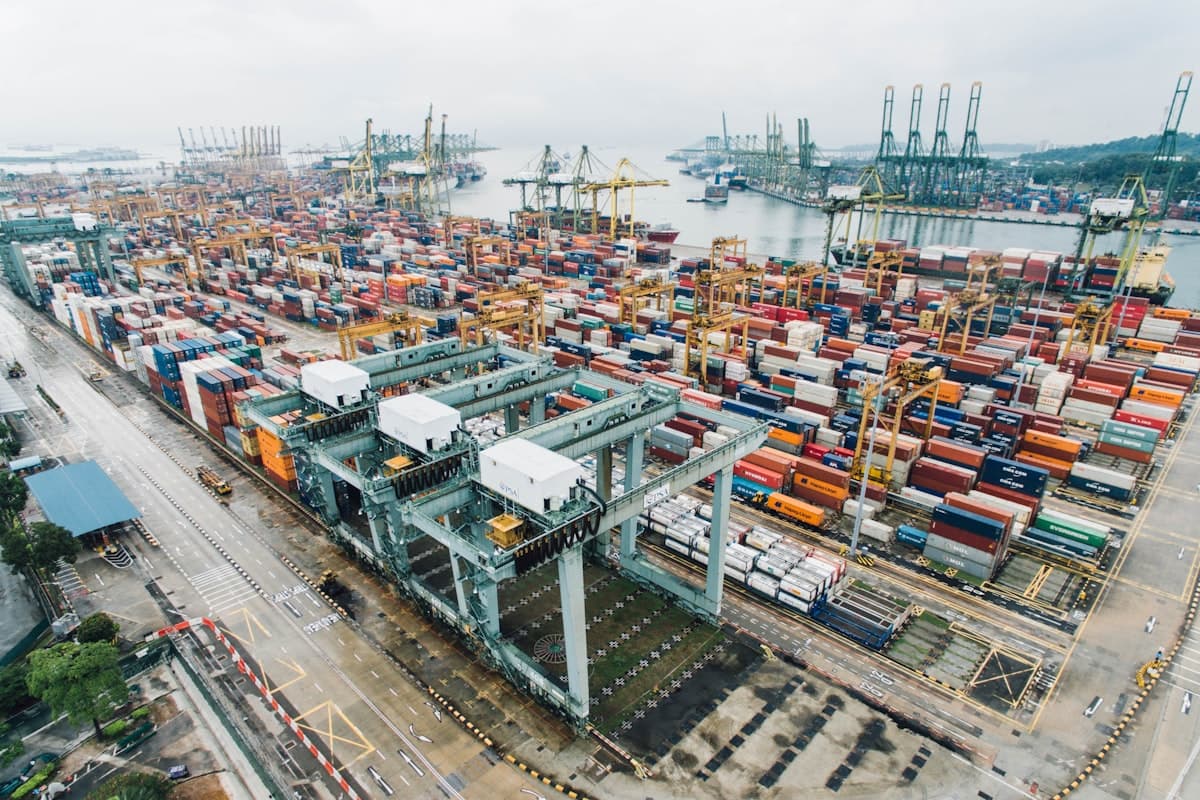
The Port of Long Beach is the second-busiest container port in the United States and a critical gateway for Asian imports. In 2025, the port processed a record 9.9 million twenty-foot equivalent units (TEUs) — surpassing its previous record by 2.4%. That's nearly 10 million containers flowing through a single port complex.
Together with the adjacent Port of Los Angeles, this port complex handles approximately 40% of all containerized imports entering the United States. If you're sourcing products from China, Vietnam, or anywhere else in Asia, there's a strong chance your inventory passes through Long Beach.
The port's infrastructure includes:
- 10 major container terminals handling vessels from every major shipping line
- Direct rail connections to transcontinental routes (BNSF and Union Pacific)
- Over 80 weekly shipping services connecting to destinations across Asia, Europe, and the Americas
- Automated terminals reducing container dwell time
For e-commerce sellers and brands importing inventory, this concentration of shipping infrastructure creates a clear strategic advantage: get your fulfillment operations as close to this port as possible. See our complete guide on 3PL in Los Angeles for why SoCal is the best fulfillment location.
The Financial Case for Port-Adjacent Fulfillment
Every mile between the port and your warehouse costs money. Here's how port proximity affects your bottom line:
Drayage Costs: Distance Equals Dollars
Drayage — the short-haul trucking of containers from port to warehouse — is priced by distance. Current rates from the Port of Long Beach typically range from $350 to $900 per container, depending on weight, distance, and chassis availability.
A warehouse in Paramount, CA (20 minutes from the port) versus one in the Inland Empire (90+ minutes) can mean a difference of $200-400 per container. Over 50 containers per year, that's $10,000-20,000 in unnecessary transportation costs.
The math is simple:
| Warehouse Location | Distance from Port | Typical Drayage Cost | Annual Cost (50 containers) |
|---|---|---|---|
| Paramount, CA | 15 miles | $350-450 | $17,500-22,500 |
| Ontario, CA | 55 miles | $500-650 | $25,000-32,500 |
| Phoenix, AZ | 370 miles | $1,200-1,500 | $60,000-75,000 |
The closer your Long Beach 3PL is to the port, the lower your per-container costs.
Demurrage Fees: The Clock Starts Immediately
Demurrage is the fee charged when your container sits at the port terminal beyond the allowed free time. At Long Beach terminals, you typically get 3-4 free days before charges kick in. After that, you're looking at $150-300 per day per container, with rates escalating the longer the container sits.
A warehouse 20 minutes from the port can pick up your container the same day it's available. A warehouse hours away may need an extra day or two to schedule the pickup — and those days can easily push you past free time.
The real cost of demurrage isn't just the daily fee. It's the cascading effect:
- Day 1-4: Free time (no charges)
- Day 5-7: $150-200/day demurrage
- Day 8+: $200-300/day, escalating
One container sitting for 5 extra days costs $750-1,500 in demurrage alone. Scale that across multiple shipments, and you're hemorrhaging money on storage fees before your products even reach a shelf.
Detention Fees: The Return Trip Matters Too
While demurrage covers port storage, detention covers the container itself after it leaves the port. Shipping lines give you a window (typically 4-5 free days) to unload the container and return it to the designated depot. Exceed that window, and detention charges start — typically $75-150 per day.
A port of Long Beach fulfillment center can:
- Receive the container same-day
- Unload and devanne within 24-48 hours
- Return the empty container to the depot within free time
A distant warehouse stretches this timeline, risking detention fees that add up fast.
Container Transloading: Why It Matters
Most e-commerce sellers don't need to keep their inventory in ocean containers. Transloading — transferring goods from ocean containers to domestic trailers or warehouse racking — happens at the warehouse level.
A Long Beach 3PL with transloading capabilities can:
- Sort and segregate inventory by SKU immediately upon arrival
- Quality inspect products before they hit your inventory count
- Repalletize for domestic distribution or Amazon FBA compliance
- Store efficiently using warehouse racking instead of container-based storage
The closer this happens to the port, the faster your inventory becomes sellable.
Transloading vs. Direct Container Storage
Some sellers ask: "Why not just store the container at the port until I need the inventory?"
The problems with that approach:
- Port storage is expensive — chassis fees, container storage fees, and demurrage add up fast
- No inventory visibility — you can't pick and ship individual units from a sealed container
- No quality control — damaged products sit undiscovered
- Slow response time — when you need inventory, you're days behind
A transloading-capable warehouse near the port gives you the benefits of port proximity with the operational flexibility of a traditional fulfillment center.
Ideal for Importers: The Long Beach Advantage
Port of Long Beach fulfillment makes the most sense for sellers who:
Import from Asia
If your products originate in China, Vietnam, South Korea, Japan, or elsewhere in Asia, they're almost certainly coming through Long Beach or the adjacent Port of Los Angeles. A nearby fulfillment center eliminates the cross-country shipping step.
Ship Significant Volume
The cost savings compound with volume. A seller moving 10 containers per year saves a few thousand dollars annually. A seller moving 100+ containers saves tens of thousands — enough to fund additional inventory, marketing, or growth initiatives.
Sell on the West Coast
If a significant portion of your customers are in California, Arizona, Nevada, Oregon, or Washington, a Long Beach-area fulfillment center provides 2-3 day ground shipping to the largest consumer market in the country.
Need Fast Inventory Turns
Seasonal products, trending items, and fast-moving consumer goods benefit from rapid port-to-shelf timelines. A Long Beach 3PL can have your inventory receiving-ready within hours of customs clearance, not days.
Sell on Amazon
Southern California has one of the highest concentrations of Amazon fulfillment centers in the country. FBA sellers can prep and forward inventory to ONT2, ONT6, ONT8, LAX9, LGB3, LGB4, and a dozen other facilities within 2-hour drive time. Short distances mean lower forwarding costs and faster check-in at Amazon.
What to Look for in a Port-Adjacent 3PL
Not all warehouses near the port offer the same capabilities. Here's what to evaluate when choosing a port of Long Beach fulfillment partner:
1. Actual Container Receiving Experience
Many warehouses claim port proximity but rarely handle ocean containers. Ask specifically:
- How many containers do you receive monthly?
- What's your average container-to-shelf turnaround time?
- Do you handle 20-foot, 40-foot, and 40-foot high-cube containers?
- Can you receive containers with appointments or on short notice?
A warehouse that processes containers weekly operates differently than one that handles them monthly.
2. Customs and Documentation Support
Getting a container released from the port involves customs clearance, ISF filing, and documentation coordination. Your 3PL should either handle this directly or have established relationships with customs brokers who can expedite the process.
Ask about their workflow for:
- Customs holds and examinations
- FDA or CPSC inspections (if applicable to your products)
- Documentation errors and corrections
- Same-day release coordination
3. Flexible Receiving Windows
Port operations don't follow a 9-to-5 schedule. Containers become available at all hours, and terminal appointments can shift without warning. A Long Beach 3PL should offer:
- Early morning receiving (6 AM or earlier)
- Late afternoon/evening appointments when needed
- Weekend receiving for urgent shipments
- Flexibility to adjust when terminal schedules change
4. Transloading and Value-Add Services
Beyond basic receiving, look for capabilities like:
- Palletization to your specifications
- Quality inspection with photo documentation
- Labeling (FNSKU, UPC, custom labels)
- Kitting and bundling for multi-packs
- Returns to vendor for defective merchandise
These services transform raw imports into sellable, shippable inventory.
15 Minutes from the Port of Long Beach
3PLGuys in Paramount, CA receives containers daily with same-day transloading. We handle FBA prep, Amazon SPN certified, with >99% order accuracy and dedicated account managers.
Get a Quote →5. Technology and Visibility
You should be able to see your inventory status from your laptop, not wait for emailed spreadsheets. Modern port-adjacent 3PLs offer:
- Real-time container tracking (when will my shipment arrive?)
- Receiving confirmation with SKU-level counts
- Photo documentation of condition issues
- Integration with your sales channels
- Automated low-stock alerts
6. Scalability
Your import volume will fluctuate — seasonal peaks, viral products, growth phases. Your Long Beach 3PL should be able to handle:
- Sudden volume spikes without service degradation
- Multiple containers arriving simultaneously
- Peak season surges (Q4, Prime Day, etc.)
- Long-term growth as your business scales
The Hidden Costs of Remote Fulfillment
Sellers sometimes choose inland fulfillment centers to save on warehouse costs — but those savings often disappear when you factor in the full picture:
Extended Transit Time
A container that clears customs on Monday at Long Beach might not reach a Phoenix warehouse until Wednesday or Thursday. That's 2-3 days of inventory sitting in transit instead of available for sale.
For fast-moving products, those days matter. For time-sensitive launches, they can mean missed sales windows.
Higher Per-Unit Transportation Costs
The drayage savings from port proximity apply to every container, every shipment, for as long as you're in business. A $200 savings per container at 50 containers per year is $10,000 annually. Over five years, that's $50,000 — likely more than any warehouse rent savings.
Increased Risk of Damage
Every additional mile increases the chance of damage in transit. Containers traveling long distances experience more vibration, more handling, and more opportunities for shifting loads to cause problems.
Complicated Logistics Coordination
Managing a supply chain with a remote fulfillment center requires more coordination: trucking schedules, warehouse appointments, inventory transfers. Each handoff point is an opportunity for delays and errors.
FAQ
Q: How close is "close enough" to the Port of Long Beach?
Ideally, within 30 minutes of driving time. This allows same-day container pickup and return, minimizing demurrage and detention risks. Paramount, Compton, Carson, and nearby cities all qualify.
Q: What's the difference between Port of Long Beach and Port of Los Angeles?
They're adjacent ports sharing San Pedro Bay. Many shipping lines call at both, and the infrastructure is interconnected. A warehouse close to one is effectively close to both.
Q: How much can I save with port-adjacent fulfillment?
Depending on your volume, expect savings of $150-400 per container in drayage costs alone. Add avoided demurrage and detention fees, and annual savings can reach $15,000-40,000+ for mid-volume importers.
Q: Can a Long Beach 3PL also handle my FBA prep?
Yes — many port-adjacent 3PLs offer full FBA prep services including FNSKU labeling, poly bagging, bundling, and shipment creation. This allows containers to go directly from port to Amazon-ready in one location.
Q: What if my customers are mostly on the East Coast?
For nationwide distribution, consider a two-warehouse strategy: receiving and primary fulfillment near Long Beach, with a secondary location in the Mid-Atlantic or Northeast for East Coast customers. Your initial import still benefits from port proximity.
Q: How quickly can a container be unloaded and processed?
A competent port of Long Beach fulfillment center can typically unload and process a standard 40-foot container within 24-48 hours of receipt, depending on product complexity and volume.
The Bottom Line
Fulfillment location isn't just about where your products sit — it's about the entire cost structure of getting those products from factory to customer. For importers shipping through the Port of Long Beach, every mile between the port and your warehouse adds cost, time, and complexity.
A Long Beach 3PL positioned within 20-30 minutes of the port offers:
- Lower drayage costs — hundreds saved per container
- Avoided demurrage and detention — no penalty fees for slow pickups
- Faster inventory turns — products ready to ship sooner
- Simplified logistics — fewer handoffs, less coordination
- Proximity to Amazon FCs — efficient FBA forwarding
The math is clear: if you're importing from Asia and selling in the United States, your fulfillment center should be as close to the Port of Long Beach as possible.
3PLGuys is located in Paramount, CA — 15 minutes from the Port of Long Beach. We receive containers daily with same-day transloading capability. As an Amazon SPN certified partner, we handle FBA prep with 99%+ order accuracy, same-day processing for orders before 2 PM PT, and dedicated account managers you can reach via Slack, email, or phone. Flexible terms, no long-term contracts.
Check out our services and pricing or contact us for a quote