Choosing the right fulfillment location can make or break your e-commerce margins. For sellers importing from Asia or serving Western U.S. customers, the West Coast is the obvious starting point. But which West Coast city?
15 Miles from Port of Long Beach
Paramount, CA location. Same-day container receiving, FBA prep, D2C fulfillment. Near-perfect accuracy.
Get a Free Quote →This guide compares the three major West Coast fulfillment hubs — Los Angeles, Seattle, and Phoenix — so you can make an informed decision based on your specific business needs.
At 3PLGuys, we're located in Paramount, CA — just 15 miles from the Port of Long Beach. For sellers importing from Asia, this location eliminates unnecessary trucking and gets products to market faster. We handle FBA prep, D2C fulfillment, TikTok Shop orders, and multi-channel distribution with same-day processing and nationwide 2-day shipping.
Why West Coast Fulfillment Location Matters
Geography drives fulfillment economics. Your warehouse location determines:
- Shipping zones and costs — closer customers = lower postage rates
- Transit times — faster delivery without expensive air freight
- Inbound freight costs — proximity to ports and suppliers
- Labor availability and costs — varies significantly by metro area
- Tax implications — California, Washington, and Arizona have different tax structures
Get the location wrong, and you'll pay for it on every order.
The Port Proximity Advantage: LA/Long Beach
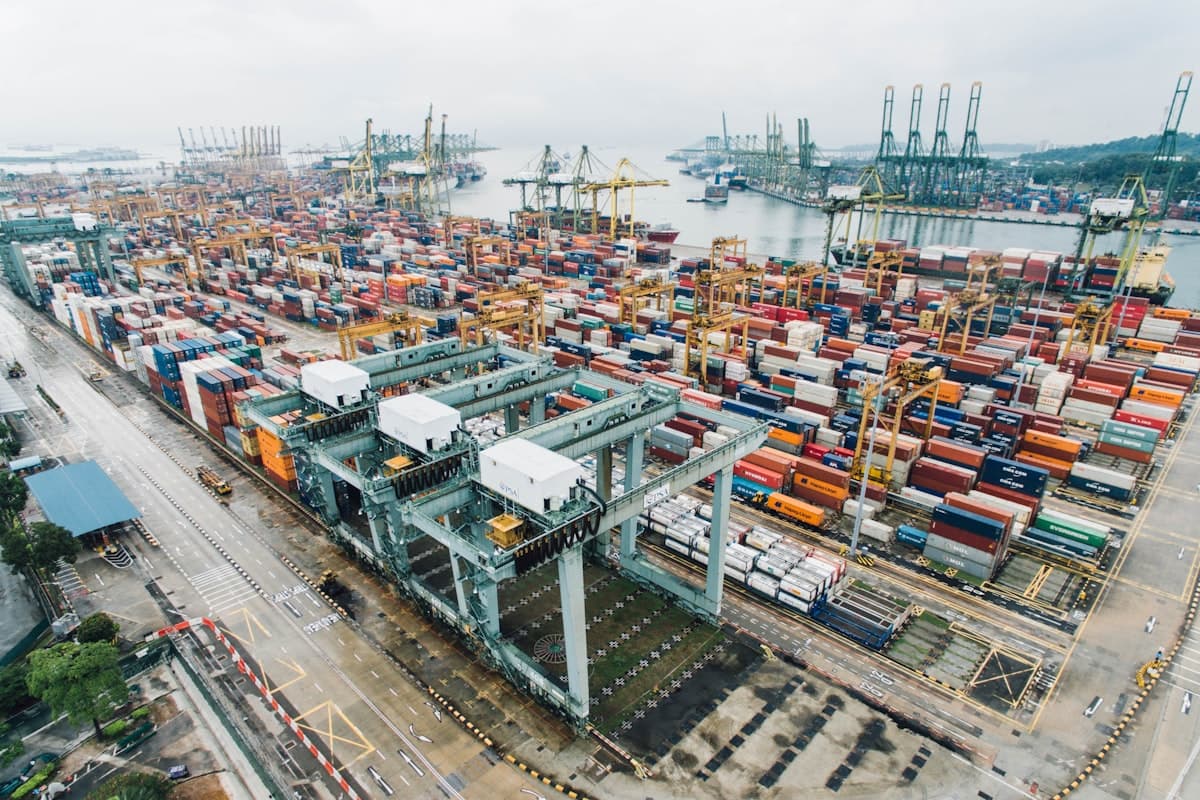
The Ports of Los Angeles and Long Beach together form the largest port complex in the United States. About 40% of all U.S. imports enter through these ports — and for goods from Asia, that percentage is even higher.
If you're importing from China, Vietnam, Taiwan, or other Asian manufacturing hubs, port proximity is the single biggest factor in your fulfillment location decision. Read our full guide on 3PL in Los Angeles to understand why SoCal dominates fulfillment.
What Port Proximity Saves You
Drayage costs — Moving a container from port to warehouse is charged per mile. A fulfillment center in Paramount, CA (15 miles from Long Beach) costs a fraction of drayage to a warehouse in Phoenix (350+ miles) or Las Vegas (270 miles).
Time to market — Your container clears customs and reaches your 3PL the same day. Products are received, inspected, and available for sale faster. For seasonal products or trending items, this speed advantage translates directly to revenue.
Container detention fees — Faster unloading means fewer demurrage and detention charges. When you're 15 miles from the port versus 300 miles, you have more flexibility to schedule deliveries around port congestion.
Damage and loss — Fewer miles traveled means lower risk of transit damage and inventory shrinkage.
The Numbers
A typical 40-foot container drayage from Long Beach:
| Destination | Miles | Approximate Cost |
|---|---|---|
| Paramount, CA | 15 | $350-500 |
| Ontario, CA | 55 | $500-700 |
| Las Vegas, NV | 270 | $1,200-1,500 |
| Phoenix, AZ | 370 | $1,500-2,000 |
Multiply that difference across 10-20 containers per month, and location choice becomes a significant line item.
Shipping Zone Coverage from West Coast
Shipping carriers divide the country into zones based on distance from the origin. Zone 1 is local; Zone 8 is cross-country. Higher zones mean higher shipping costs.
Here's how the three West Coast hubs compare for zone coverage:
From Los Angeles
- Zone 1-2: Southern California (40+ million people)
- Zone 3-4: Arizona, Nevada, Northern California, Utah
- Zone 5-6: Pacific Northwest, Texas, Colorado, Midwest
- Zone 7-8: East Coast
Los Angeles puts Zone 1-4 shipping within reach of roughly 70 million Americans in the Western U.S. and Southwest.
From Seattle
- Zone 1-2: Washington, Oregon
- Zone 3-4: Northern California, Idaho, Montana
- Zone 5-6: Southern California, Southwest, Mountain states
- Zone 7-8: Midwest and East Coast
Seattle optimizes for the Pacific Northwest — about 15 million people in Zone 1-4.
From Phoenix
- Zone 1-2: Arizona, Southern California, Nevada
- Zone 3-4: New Mexico, Utah, Colorado, Texas
- Zone 5-6: Northern California, Pacific Northwest, Midwest
- Zone 7-8: East Coast
Phoenix provides Zone 1-4 coverage to approximately 50 million people across the Southwest.
LA vs Seattle vs Phoenix: Direct Comparison
Let's break down each location across the factors that matter most.
Los Angeles / Long Beach
Best for: Import-heavy businesses, Amazon FBA prep, brands with West Coast customer concentration
Pros:
- Unmatched port proximity — #1 U.S. port complex
- Largest consumer market on West Coast (20+ million in metro)
- Dense Amazon fulfillment center network for FBA forwarding
- Extensive logistics infrastructure and carrier options
- Deep labor pool with fulfillment experience
Cons:
- Higher warehouse lease rates than Phoenix
- California labor costs and regulations
- Traffic congestion can affect local transit times
- Not ideal for nationwide 2-day shipping as a single location
Typical use case: You import 5+ containers monthly from Asia and sell primarily through Amazon FBA or to West Coast D2C customers.
Seattle / Tacoma
Best for: Pacific Northwest sellers, Canada-focused brands, importers who can tolerate smaller port capacity
Pros:
- Closest major U.S. port to Asia — fastest ocean transit times
- Less port congestion than LA/Long Beach
- Excellent Pacific Northwest coverage
- Easy access to Canadian market
- No state income tax (Washington)
Cons:
- Smaller port capacity and carrier options
- Limited reach to Southwest and Southern markets
- Higher operating costs than Phoenix
- Weather can occasionally disrupt operations
Typical use case: You sell primarily to customers in Washington, Oregon, and Northern California, or you're using Seattle as a secondary location for Pacific Northwest distribution.
Phoenix
Best for: Cost-conscious brands, Southwest distribution, businesses avoiding California regulations
Pros:
- Lower warehouse lease rates (10%+ less than LA/Inland Empire)
- No inventory tax in Arizona
- Excellent interstate access (I-10, I-17)
- 300+ days of sunshine — minimal weather disruptions
- Growing labor pool
- 35 million consumers within one-day truck haul
Cons:
- No port access — all imports require inland transit
- Higher drayage costs from LA/Long Beach
- Further from Northern California markets
- Fewer carrier options than LA
Typical use case: You've already cleared your goods through LA/Long Beach and want lower ongoing fulfillment costs, or your products are domestically sourced.
Import-Heavy Businesses: Why LA Wins
If you're importing more than a few containers per month from Asia, the math strongly favors Los Angeles.
Total Inbound Cost Comparison
Consider a business importing 10 containers monthly from Shenzhen:
LA-based fulfillment:
- Ocean freight: Shenzhen to Long Beach
- Drayage: $400 average per container
- Total inbound per container: ~$400
Phoenix-based fulfillment:
- Ocean freight: Shenzhen to Long Beach
- Drayage: $1,700 average per container
- Total inbound per container: ~$1,700
Annual difference: 120 containers x $1,300 = $156,000 in additional inbound costs
That $156,000 could fund better shipping rates, faster processing, or go straight to your bottom line.
Speed Matters
Beyond cost, speed creates competitive advantage:
- LA-based: Container clears → same day at 3PL → next day available for orders
- Phoenix-based: Container clears → 1-2 days in transit → next day receiving → 2-3 days before available
For trending products, pre-orders, or seasonal inventory, those extra days cost sales.
Transit Time Considerations
Transit time affects customer satisfaction, return rates, and repeat purchases. Here's how the three locations compare for ground shipping:
Days to Major Markets (Ground Shipping)
| Market | From LA | From Seattle | From Phoenix |
|---|---|---|---|
| Los Angeles | Same day | 3 days | 2 days |
| San Francisco | 2 days | 2 days | 2-3 days |
| Seattle | 3 days | Same day | 3 days |
| Phoenix | 2 days | 3 days | Same day |
| Denver | 3 days | 3-4 days | 2 days |
| Dallas | 3 days | 4 days | 2-3 days |
| Chicago | 4 days | 4-5 days | 4 days |
| New York | 5 days | 5-6 days | 5 days |
Key insight: LA and Phoenix have similar reach to most markets. Seattle is optimized for the Pacific Northwest but adds days to everything else.
When 2-Day Nationwide Matters
None of these locations alone provides 2-day ground shipping nationwide. If your brand promise is 2-day delivery everywhere, you need:
- A West Coast location (LA or Phoenix) plus
- An East Coast location (Pennsylvania, New Jersey, or Ohio)
The dual-warehouse strategy covers 95%+ of U.S. customers within 2-day ground.
When East Coast Makes More Sense
West Coast fulfillment isn't always the answer. Consider East Coast-first or East Coast-only if:
Your Customers Are Concentrated East of the Mississippi
About 70% of the U.S. population lives east of the Mississippi River. If your customer base mirrors the general population, an East Coast location reaches more customers in lower shipping zones.
The math: From New Jersey, 210+ million Americans live in Zones 1-4. From Los Angeles, those same customers are in Zones 5-8 — and the cost difference per package can be $2-5+.
You Don't Import from Asia
If your products are manufactured domestically, sourced from Mexico, or imported through East Coast ports (Savannah, Newark, Charleston), West Coast ports offer no advantage.
Speed to East Coast Is Critical
Some product categories — perishables, medical supplies, time-sensitive items — can't wait 5 days for ground shipping to the East Coast. If you're air-freighting to reach East Coast customers anyway, you're paying premium rates to overcome your location disadvantage.
Your Volume Doesn't Justify Two Locations
If you're doing 50-200 orders per day, splitting inventory between two warehouses creates complexity:
- Split inventory means higher per-location carrying costs
- More SKUs to manage across locations
- Potential stockouts at one location while the other has surplus
- More complexity in your WMS and operations
For lower-volume sellers, a single central location (Dallas, Chicago, or even Nashville) may outperform a West Coast location.
Frequently Asked Questions
Which West Coast city has the lowest fulfillment costs?
Phoenix typically has the lowest warehouse lease rates and operating costs, running 10-15% lower than the Los Angeles area. However, if you're importing from Asia, the higher drayage costs to Phoenix often offset these savings. For import-heavy businesses, Los Angeles area (including Paramount, Long Beach, and the Inland Empire) offers the best total cost when factoring in inbound freight.
How close to the Port of Long Beach do I need to be?
Closer is always better for drayage costs, but anywhere within 30 miles provides similar operational advantages. The key is avoiding the Inland Empire (Ontario, San Bernardino) if drayage cost is a priority — those extra 40-50 miles add $200-300 per container. Paramount, Compton, Carson, and Long Beach itself are all within the optimal zone.
Should I choose a 3PL based on port proximity or shipping zone coverage?
It depends on your business model. If you import heavily from Asia, port proximity should be your primary factor — you'll save on every inbound container. If your products are domestically sourced or you're already warehousing inventory stateside, optimize for shipping zones based on where your customers are concentrated.
What about a dual-location strategy: West Coast + East Coast?
A dual-location strategy makes sense when you're doing 500+ orders per day and your customers are distributed nationally. The typical setup is LA or Phoenix for West Coast plus Pennsylvania or New Jersey for East Coast. This combination covers 95%+ of U.S. customers within 2-3 day ground shipping while keeping inventory balanced across zones.
Is California's regulatory environment a dealbreaker for fulfillment?
California has stricter labor laws and higher minimum wages than Arizona or Washington. For some businesses, this tips the scale toward Phoenix. However, the logistics infrastructure in Southern California — carriers, labor pool, port proximity — often outweighs the regulatory costs. If you're importing from Asia, the port advantage alone is worth the California premium.
Can Seattle work as a primary fulfillment location?
Seattle works well as a primary location if your customer base is concentrated in the Pacific Northwest or you're expanding into Canada. The Port of Seattle also offers faster ocean transit times from Asia than LA/Long Beach, with less congestion. However, for nationwide distribution, Seattle adds 1-2 days to most markets compared to Los Angeles.
The Bottom Line
For most e-commerce brands importing from Asia, Los Angeles area fulfillment — particularly locations near the Port of Long Beach like Paramount, CA — offers the best combination of port proximity, shipping zone coverage, and logistics infrastructure.
Choose LA if:
- You import containers from Asia
- You sell through Amazon FBA
- Your customer base is concentrated in the Western U.S.
- Port-to-warehouse speed matters for your products
Choose Phoenix if:
- You source products domestically
- You want to avoid California regulations
- Lower operating costs are your priority
- Southwest distribution is your focus
Choose Seattle if:
- Pacific Northwest is your primary market
- You're expanding into Canada
- You value less port congestion over port capacity
Ready to explore West Coast fulfillment options? 3PLGuys is based in Paramount, CA — 15 miles from the Port of Long Beach, with same-day container receiving, FBA prep, and D2C fulfillment.