Quick Answer: Wholesale fulfillment handles bulk orders from consumer brands to retailers, distributors, and other businesses. Unlike D2C shipping, wholesale requires EDI integration, retailer-specific compliance (routing guides, labeling, pallet specs), and the ability to ship cases and pallets rather than individual units. A specialized wholesale 3PL prevents costly chargebacks and keeps your retailer relationships healthy.
Landing your first major retail account is exciting. Getting dropped because you can't meet their fulfillment requirements is not.
Wholesale fulfillment operates under completely different rules than direct-to-consumer. The order sizes are bigger, the compliance requirements are stricter, and the penalties for mistakes hit your margins hard. Consumer brands that succeed in wholesale distribution understand these differences and build the right infrastructure from day one.
This guide covers everything about wholesale fulfillment: retailer compliance, EDI requirements, and how to choose a B2B fulfillment partner who won't cost you money in chargebacks.
At 3PLGuys, we handle wholesale fulfillment from our facility in Paramount, CA — 15 minutes from the Port of Long Beach. We offer EDI integration, retailer-compliant labeling and pallet building, near-perfect order accuracy, and dedicated account managers you can reach via Slack, email, or phone. Flexible terms, no long-term contracts.
What Is Wholesale Fulfillment?
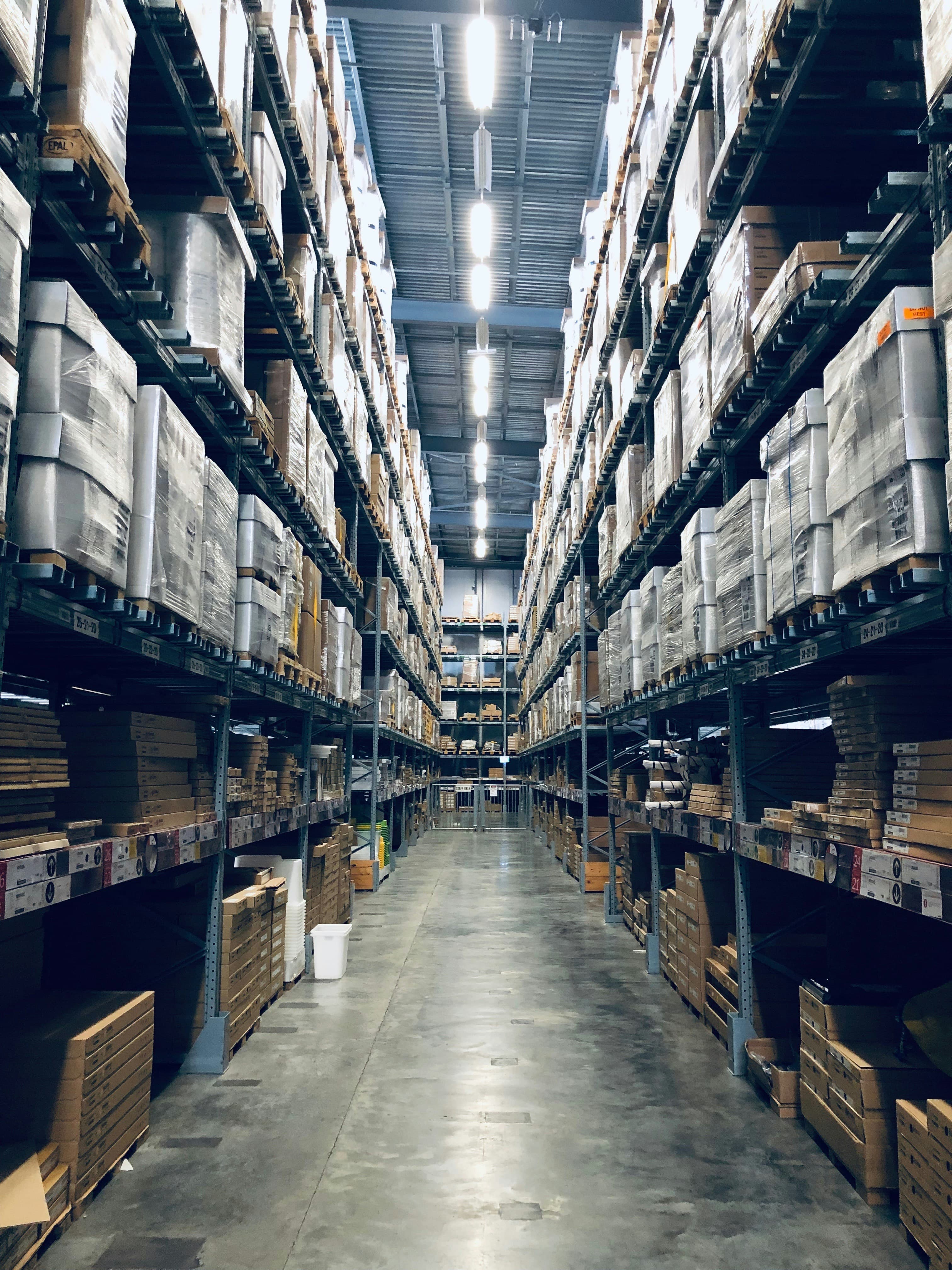
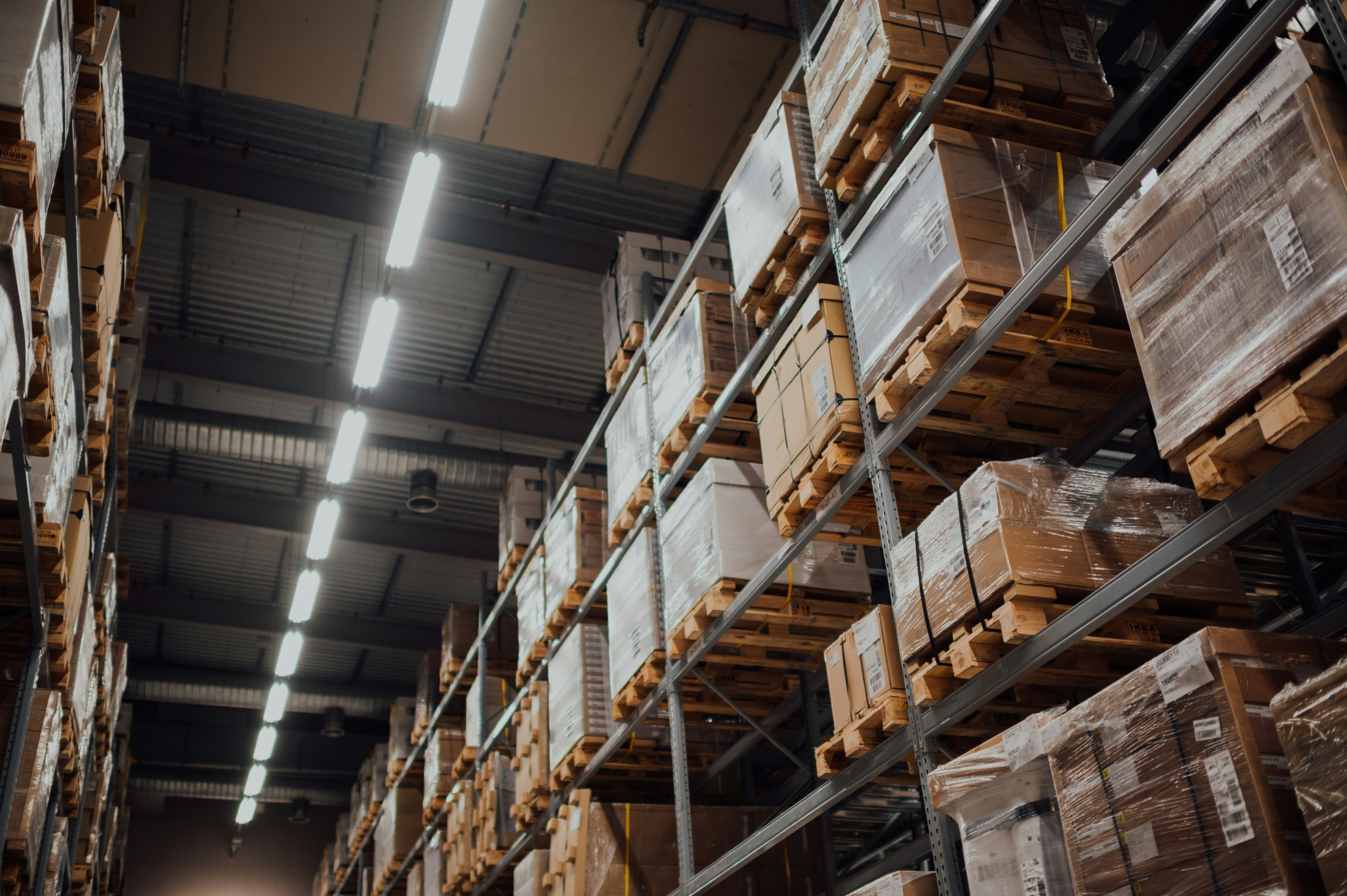
Wholesale fulfillment is the process of storing, picking, packing, and shipping bulk orders to retailers, distributors, and businesses. Instead of shipping individual products to consumers, you're shipping cases, pallets, or truckloads to business addresses — typically retailer distribution centers.
The fundamental differences from D2C fulfillment include:
- Order size: Hundreds or thousands of units per order instead of 1-3 items
- Shipping method: Freight carriers (LTL, FTL) instead of parcel carriers
- Packaging: Industrial cartons and pallets instead of branded mailers
- Documentation: EDI transactions, ASNs, and compliance paperwork instead of simple tracking numbers
- Delivery: Scheduled appointments at loading docks instead of residential doorsteps
Wholesale distribution fulfillment requires different capabilities, technology, and expertise than D2C fulfillment.
B2B vs. D2C: Why It Matters
If you've been running D2C operations successfully, you might assume you can handle wholesale the same way — just bigger orders. This assumption leads to expensive failures.
D2C fulfillment optimizes for:
- Speed (same-day or next-day shipping)
- Customer experience (branded packaging, inserts)
- High volume of small shipments
- Parcel carrier relationships
Wholesale logistics optimizes for:
- Compliance (meeting retailer specifications exactly)
- Accuracy (ASN data matching physical shipments)
- Bulk efficiency (pallet building, freight coordination)
- Documentation (EDI, routing guides, appointment scheduling)
The skills and systems that make you excellent at D2C won't translate directly to wholesale. Consumer brands that expand into retail need to either build new capabilities or partner with specialists.
Why Consumer Brands Need Wholesale Fulfillment
Moving from D2C-only to wholesale distribution opens significant growth opportunities — but requires dedicated wholesale capabilities.
The Revenue Opportunity
Wholesale accounts typically represent higher revenue per transaction with lower customer acquisition costs. Instead of acquiring thousands of individual customers, you're acquiring a handful of retail partnerships that generate substantial ongoing volume.
A single order from Target or Walmart can equal hundreds of D2C orders. The unit economics shift dramatically when you're shipping pallets instead of individual boxes.
The Margin Trap
Here's where consumer brands get hurt: wholesale margins are tighter than D2C. You're selling at wholesale prices (typically 40-60% below retail), so your per-unit profit is lower. Compliance failures — chargebacks, rejection fees, reshipment costs — can eliminate your margin entirely.
Brands that succeed in wholesale treat compliance as a profit protection strategy. Every chargeback avoided is margin preserved.
The Operational Challenge
Your D2C 3PL probably can't handle wholesale. They're optimized for picking individual items and shipping small parcels. Ask them to build a pallet to Walmart's specifications, transmit an EDI 856, and deliver to a distribution center appointment window — and they'll struggle.
This is why wholesale 3PL partnerships exist. Specialized providers understand retail compliance and have the systems to execute it.
Key Requirements for Wholesale Operations
Before you can ship to major retailers, you need these capabilities in place.
Essential Wholesale Fulfillment Checklist
Technology:
- EDI integration (850, 855, 856, 810 transaction sets)
- WMS capable of case and pallet-level tracking
- Automated ASN generation with accurate SSCC data
- Integration with your sales/ERP systems
Operations:
- Pallet building to retailer specifications
- GS1-128 compliant labeling capability
- Freight carrier relationships (LTL and FTL)
- Delivery appointment scheduling and management
- Quality control process before shipment
Documentation:
- Routing guide compliance protocols
- Packing list generation
- Bill of lading creation
- Chargeback tracking and dispute process
Team:
- Staff trained on retailer-specific requirements
- Account manager for each major retailer relationship
- Compliance monitoring and metrics tracking
If you're missing any of these capabilities internally, a wholesale 3PL fills the gap.
Case Pack Configuration
Retailers order in case packs, not individual units. Before you can ship wholesale, you need to establish case configurations:
- Inner pack count: How many units per inner carton
- Case pack count: How many inners per master case
- Case dimensions: Length, width, height in inches
- Case weight: Gross weight per case
These specifications get loaded into the retailer's system. When they send a purchase order, they're ordering cases — not units. If your case configuration doesn't match what's in their system, the order fails before it starts.
Inventory Allocation
Wholesale and D2C pull from the same inventory pool, but they have different priority levels. Many brands separate inventory:
- D2C reserve: Safety stock for consumer orders
- Wholesale allocation: Committed inventory for retailer POs
- Flex inventory: Available for either channel based on demand
Without clear allocation rules, you risk overselling to consumers when a wholesale PO arrives — or missing retailer fill rates because D2C orders depleted stock.
Retailer Compliance: What You Need to Know
Every major retailer publishes a routing guide — a detailed document specifying exactly how vendors must prepare and ship orders. Non-compliance triggers chargebacks.
Major Retailer Requirements
Walmart:
- OTIF (On-Time In-Full) compliance required — 3% chargeback for failures
- ASN must transmit within 30 minutes of shipment
- Specific pallet configurations and labeling requirements
- EDI 850, 855, 856, 810 mandatory
Target:
- Partners Online portal for all compliance monitoring
- Strict ASN accuracy requirements
- DPCI and UPC identifiers required
- Chargebacks for documentation and labeling violations
Amazon Vendor Central:
- PO acknowledgment within 24 hours
- ASN required before delivery
- Amazon-specific packaging and labeling standards
- Performance metrics affect future PO allocation
Costco:
- Pallet display requirements (club store presentation)
- Specific labeling and packaging standards
- Appointment scheduling through their system
- Strict on-time delivery requirements
Each retailer's requirements are different. What works for Walmart won't necessarily work for Target. Your wholesale fulfillment operation needs to handle retailer-specific configurations.
Wholesale Fulfillment That Protects Your Retail Relationships
3PLGuys handles retailer-compliant B2B fulfillment with >99% order accuracy, EDI integration, and dedicated account managers. 15 minutes from Port of Long Beach. Flexible terms, no long-term contracts.
Get a Quote →Common Compliance Violations
These are the mistakes that generate chargebacks most often:
ASN errors:
- Late ASN (transmitted after delivery)
- Quantity mismatch (ASN says 500, shipment contains 498)
- Missing SSCC numbers
- Incorrect carton-level data
Labeling problems:
- Non-scannable barcodes
- Wrong label placement
- Missing or incorrect information
- Labels placed on seams or curves
Packaging failures:
- Wrong carton dimensions
- Overweight pallets
- Incorrect pallet build pattern
- Missing stretch wrap or corner boards
Delivery issues:
- Missed appointment windows
- Early delivery (before requested ship date)
- Wrong carrier used
- Incorrect routing
The Cost of Non-Compliance
Chargebacks typically range from 1% to 5% of invoice value per violation. Walmart's OTIF program charges 3% for late or incomplete shipments.
But direct fees are just the start. Repeated violations lead to:
- Vendor probation status
- Reduced purchase order allocation
- Required use of specific (expensive) carriers
- Termination of the vendor relationship
For most consumer brands, losing a major retailer account over preventable compliance failures is catastrophic. The revenue impact far exceeds any chargeback fees.
How to Choose a Wholesale 3PL
Not every 3PL can handle wholesale distribution fulfillment. The capabilities required are fundamentally different from D2C operations.
Must-Have Capabilities
A qualified wholesale 3PL needs:
EDI integration: Native support for common EDI transactions, or proven integration with major EDI providers. Ask which transaction sets they support and which retailers they've shipped to.
Retailer experience: They should have existing relationships with your target retailers. Ask to see their chargeback history — a 3PL with serious wholesale experience will have metrics on OTIF rates and compliance performance.
Pallet operations: Building pallets to spec, handling mixed-SKU pallets, floor loading when required. This is specialized work that D2C-focused 3PLs don't do.
Labeling compliance: Generating GS1-128 labels with correct SSCC numbers, placing labels according to retailer specifications, ensuring barcode scannability.
ASN accuracy: Validating shipments against ASN data before transmission. The ASN is the most chargeback-prone document — your 3PL needs processes to ensure accuracy.
Freight management: LTL and FTL carrier relationships, appointment scheduling with retailer DCs, on-time delivery performance tracking.
Questions to Ask Before Signing
- Which retailers have you shipped to, and what's your chargeback rate with them?
- How does your WMS integrate with EDI, and what's your process for ASN validation?
- How do you handle retailer-specific routing guide requirements?
- Who's responsible if a shipment gets a chargeback?
- Can you show me a sample routing guide compliance report?
A 3PL that's vague on these questions isn't ready for serious wholesale fulfillment.
Red Flags to Watch For
- "We can figure it out" — Wholesale compliance isn't something you learn on the job with your inventory
- No retailer references — If they can't provide contacts at brands shipping to major retailers, be skeptical
- EDI through manual processes — True EDI requires system integration, not someone re-keying data
- No chargeback data — Either they don't track it (bad) or they don't want to share it (worse)
- D2C focus — A 3PL that talks mainly about parcel shipping and unboxing experiences isn't a wholesale specialist
Common Mistakes in Wholesale Fulfillment
Consumer brands entering wholesale make predictable errors. Avoid these:
1. Using Your D2C 3PL
Your parcel-focused 3PL built systems for individual orders. They may claim they can handle wholesale, but lacking EDI integration, pallet capabilities, and retailer experience means they're learning with your money.
Fix: Partner with a specialized B2B 3PL for wholesale orders, even if you keep your D2C 3PL for consumer fulfillment.
2. Underestimating Setup Time
EDI integration, routing guide compliance, and retailer onboarding take weeks — not days. Brands that win a retail account and try to ship within two weeks face rushed setups that create compliance failures.
Fix: Start 3PL conversations and EDI setup before you close the retail deal. Build 30-60 days of lead time into your retailer timeline.
3. Ignoring Routing Guides
Every retailer publishes a routing guide. Many brands don't read them carefully until chargebacks appear.
Fix: Download and study the routing guide for each retailer relationship. Build compliance checkpoints into your fulfillment process.
4. Manual ASN Processes
Manually creating ASNs introduces errors. Quantity mismatches, typos, timing issues — all generate chargebacks.
Fix: Automate ASN generation through your 3PL or EDI provider. Validate data accuracy before transmission.
5. Not Tracking Compliance Metrics
If you don't know your OTIF rate or chargeback history by retailer and category, you can't improve.
Fix: Require weekly compliance reporting from your 3PL. Track trends, not just incidents.
Frequently Asked Questions
What is wholesale fulfillment?
Wholesale fulfillment is the process of storing, picking, packing, and shipping bulk orders to retailers, distributors, and other businesses. Unlike D2C fulfillment, wholesale handles case and pallet quantities, requires EDI integration for order processing, and must comply with retailer-specific routing guides and labeling standards.
How is wholesale fulfillment different from D2C?
Wholesale fulfillment ships larger quantities (cases and pallets vs. individual items), uses freight carriers (LTL/FTL vs. parcel), requires EDI integration and compliance documentation, and delivers to business addresses with scheduled appointments rather than residential doorsteps. The compliance requirements are also significantly stricter.
What is a routing guide?
A routing guide is a retailer's detailed specification document that defines exactly how vendors must prepare and ship orders. It covers carrier requirements, labeling standards, packaging specifications, appointment scheduling, EDI transactions, and documentation requirements. Non-compliance with routing guide specifications triggers chargebacks.
What EDI transactions do I need for wholesale?
Most retail relationships require four core EDI transaction sets: EDI 850 (Purchase Order), EDI 855 (PO Acknowledgment), EDI 856 (Advance Ship Notice/ASN), and EDI 810 (Invoice). If you're working with a 3PL, you'll also use the 940 (Warehouse Shipping Order) and 945 (Warehouse Shipping Advice) to communicate with their warehouse management system.
Can my D2C 3PL handle wholesale orders?
Unlikely. D2C fulfillment and wholesale fulfillment require different capabilities. Your D2C 3PL may lack EDI integration, pallet-building expertise, freight carrier relationships, and experience with retailer routing guides. Using a D2C-focused 3PL for wholesale usually results in compliance failures and chargebacks.
How much do retailer chargebacks cost?
Chargeback fees typically range from 1% to 5% of invoice value per violation. Walmart's OTIF program charges 3% for late or incomplete shipments. Beyond direct fees, repeated violations can result in reduced purchase order allocation, vendor probation, or termination of the retailer relationship.
What should I look for in a wholesale 3PL?
Look for EDI integration capabilities, specific experience with your target retailers, pallet and case-pack operations, GS1-128 labeling compliance, ASN accuracy processes, and freight management expertise. Ask for chargeback history data and retailer references before signing.
How long does wholesale fulfillment setup take?
Expect 4-8 weeks for full setup including EDI integration, routing guide compliance configuration, and test shipments. Rushing setup to meet a retailer deadline typically creates compliance failures that cost more than the delay would have.
The Bottom Line
Wholesale fulfillment is a different discipline than D2C. Consumer brands that succeed in retail distribution treat compliance as core infrastructure — not an afterthought. The brands that struggle are the ones who assume their D2C operations can stretch to cover wholesale requirements.
The path to successful wholesale fulfillment:
- Understand that B2B and D2C require different capabilities
- Study routing guides for each retailer relationship
- Partner with a specialized wholesale 3PL that has proven retailer experience
- Invest in proper EDI integration before your first shipment
- Track compliance metrics and address issues proactively
The retailers you're trying to reach process millions of shipments. They need vendors who can meet their specifications consistently. The brands that demonstrate compliance capability get larger POs, better placement, and longer relationships.
If you're a consumer brand expanding into wholesale and need a fulfillment partner who understands retail compliance, EDI, and routing guide requirements, talk to 3PLGuys about B2B fulfillment. Our Paramount, CA facility is 15 minutes from the Port of Long Beach, with 99%+ order accuracy, dedicated account managers available via Slack, email, or phone, and flexible terms with no long-term contracts.