Every online order triggers a chain of physical events the customer never sees. Between "Place Order" and the box on the doorstep sits the order fulfillment process — and how well it runs decides your shipping speed, your accuracy, your costs, and a surprising share of your reviews.
What is order fulfillment? Order fulfillment is the complete process of receiving inventory, storing it, processing customer orders, picking and packing products, shipping them, and handling returns. It starts when inventory arrives at a warehouse and ends when the customer has the product in hand — or has successfully returned it.
This guide walks through every step, where each one typically breaks, and the numbers that tell you whether your fulfillment is actually working.
The 7 Steps of the Order Fulfillment Process
Step 1: Receiving Inventory
Fulfillment starts before any order exists. Inventory arrives at the warehouse — as containers from overseas manufacturers, pallets from domestic suppliers, or parcels from a previous warehouse — and gets counted, inspected, and checked in.
Good receiving is meticulous: quantities verified against the packing list and purchase order, damage documented with photos, discrepancies reported immediately, and every SKU entered into the warehouse management system (WMS) so it's sellable the moment it hits a shelf.
Where it breaks: slow receiving is invisible until it isn't. Inventory sitting on a dock for a week is inventory you own but can't sell — and during Q4, a slow dock-to-stock time can mean missing the season entirely.
Step 2: Storage
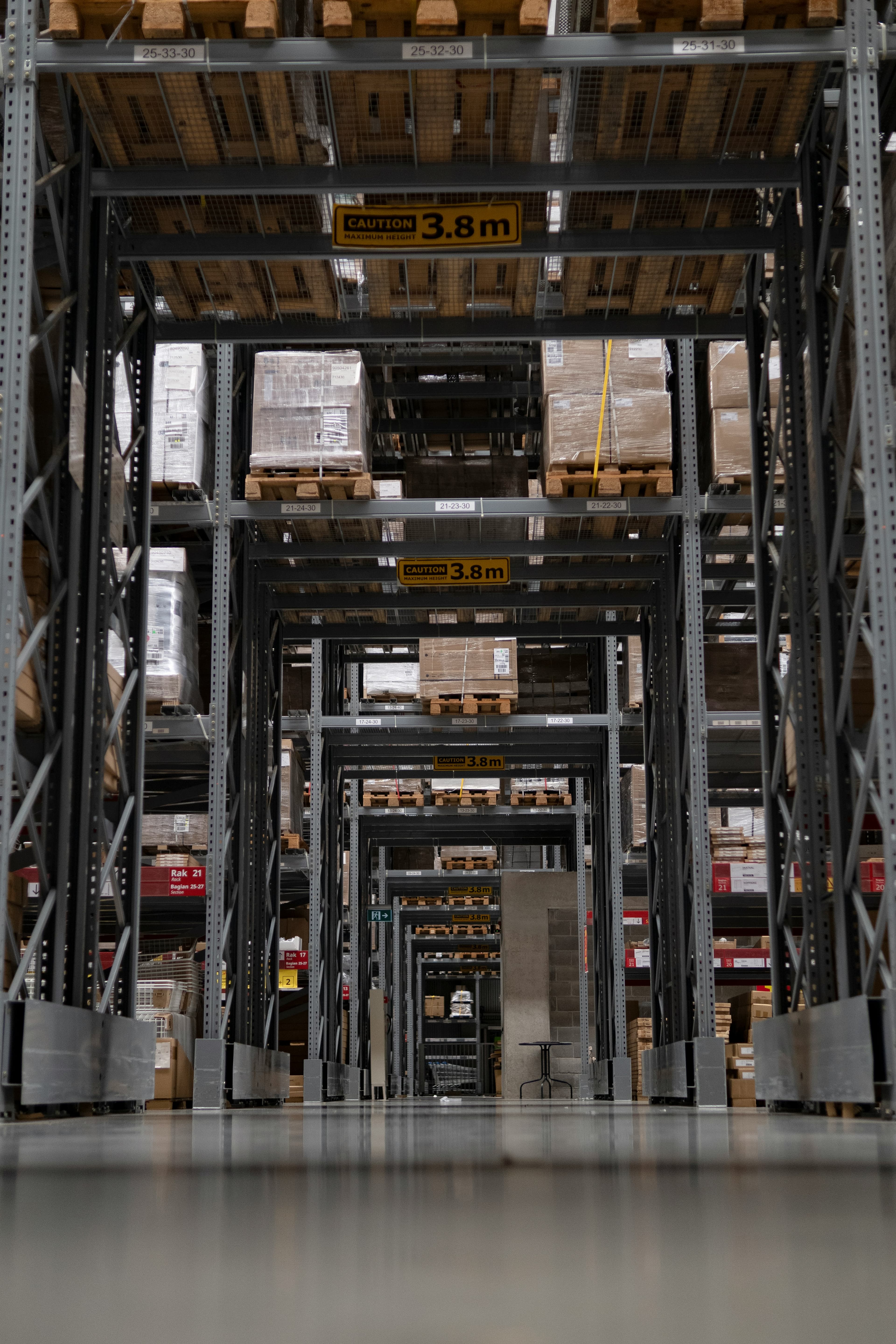
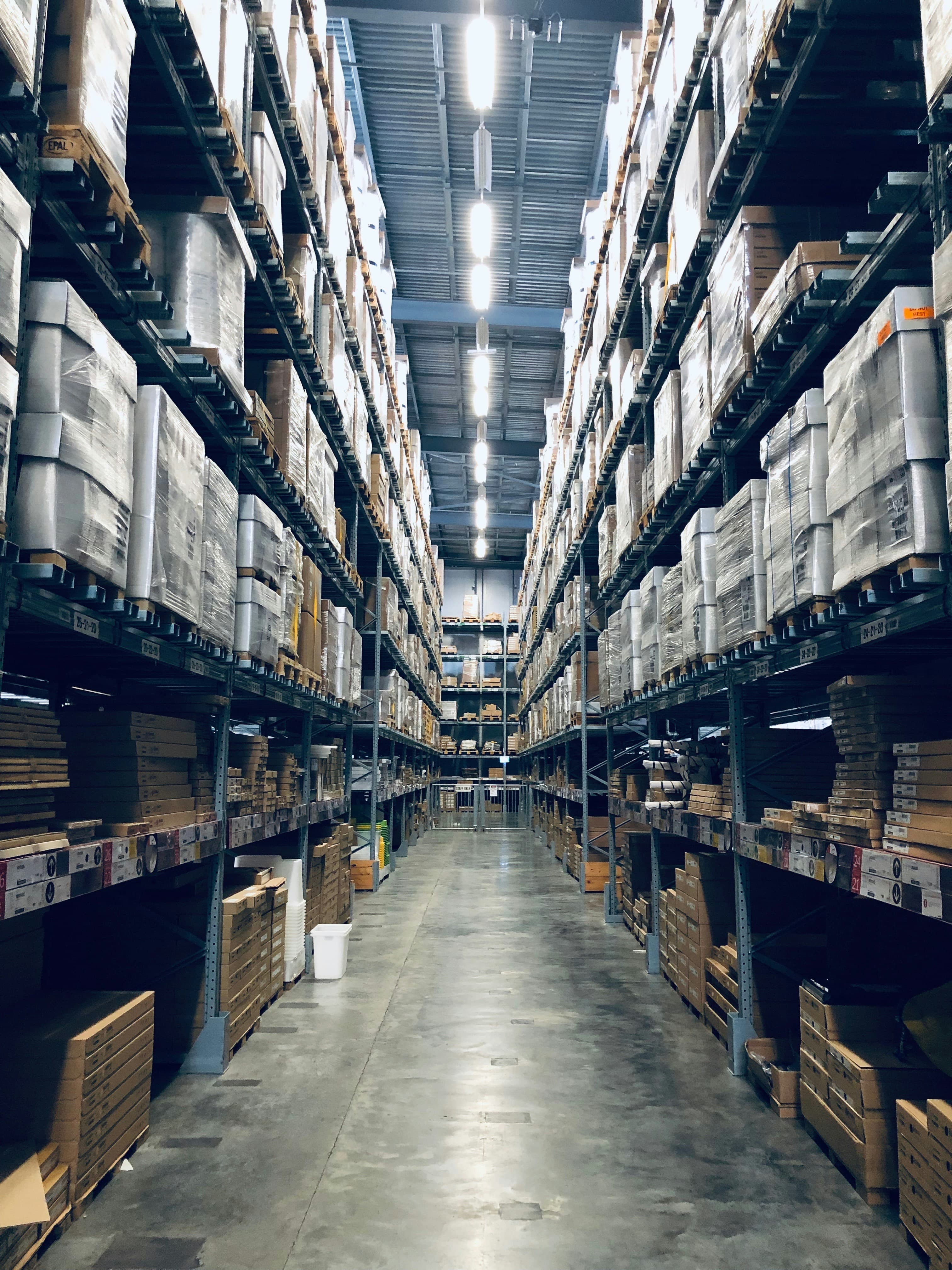
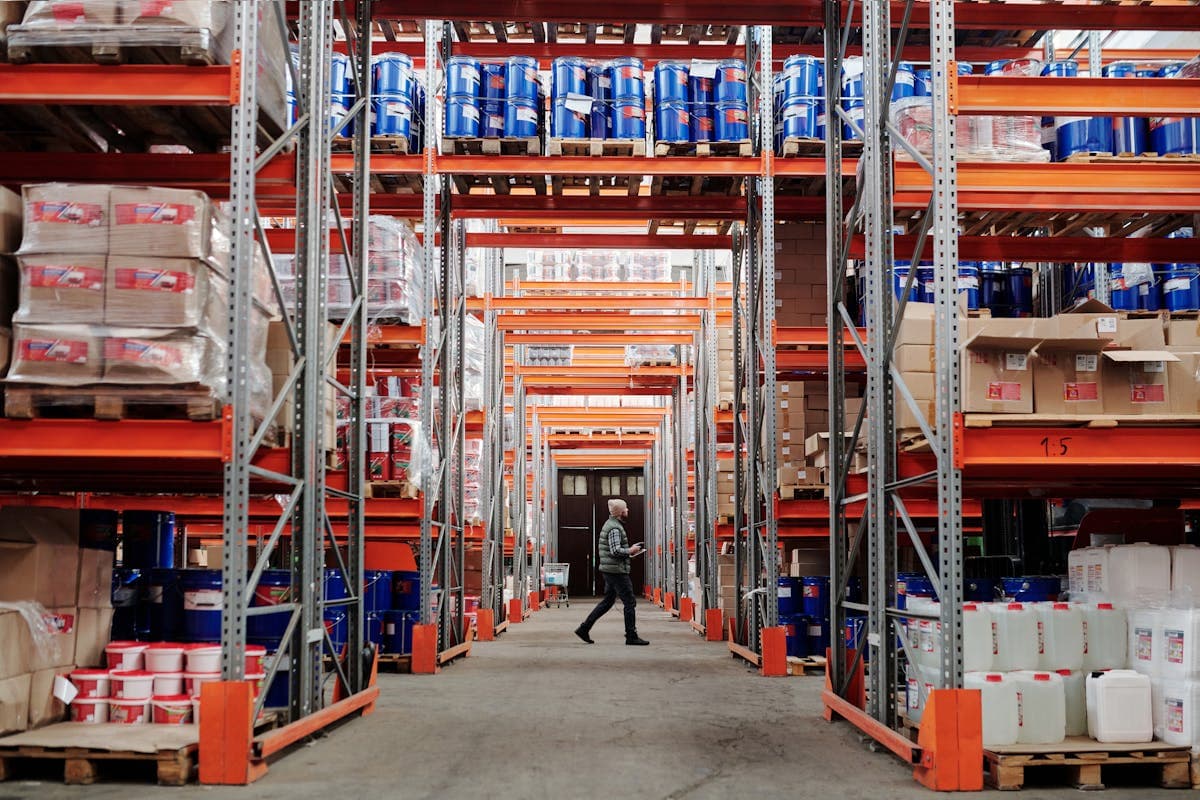
Received inventory is put away into assigned locations — pallet racks for bulk stock, shelving or bins for pick-ready units. Every location is barcoded and mapped in the WMS, so the system always knows exactly where every unit lives.
Smart warehouses slot inventory by velocity: fast-moving SKUs go near packing stations to shorten pick paths; slow movers go higher and deeper. Products with special requirements — lot-tracked goods, temperature-sensitive items, high-value products — get storage that matches (FDA-registered facilities handle regulated products like cosmetics and supplements with lot and expiration tracking).
Where it breaks: untracked storage. If the system says 40 units and the shelf has 32, you'll sell 8 orders you can't ship — creating backorders and refunds.
Step 3: Order Processing
A customer places an order on your store — Shopify, Amazon, TikTok Shop, a wholesale portal. That order flows into the warehouse's system, ideally through a direct integration with no human touching it. The system confirms inventory, assigns the order to a pick batch, and generates the documents: a pick list for the warehouse floor and a packing slip for the box.
Speed here sets the ceiling for everything after. An order that syncs instantly can ship same-day; an order imported by hand tomorrow morning can't.
Where it breaks: channel sprawl without integration. Orders from five platforms managed through spreadsheets and manual exports produce missed orders, double-shipments, and oversells.
Step 4: Picking
A warehouse associate (or several, in batch and zone systems) takes the pick list and physically retrieves each item. Modern operations scan-verify every pick: the associate scans the bin location and the product barcode, and the system confirms it's the right SKU before the order can move on.
Picking methods vary by volume — single-order picking for low volume, batch picking (many orders in one pass) and zone picking (each picker owns an area) for scale. The method matters less than the verification: scanning is what turns "we think it's right" into a measured accuracy rate. Our complete guide to pick and pack fulfillment covers the methods in detail.
Where it breaks: unscanned picking. Human eyes confuse similar SKUs — size variants, color variants, new packaging — and every mis-pick becomes a customer with the wrong product plus two shipping labels' worth of cost to fix it.
Step 5: Packing
Picked items are boxed for transit: the right carton size, appropriate dunnage to protect the product, the packing slip inside, and any extras — inserts, samples, gift notes. Orders that require kitting or bundling — subscription boxes, multi-product sets, retail-ready packs — are assembled here or in a dedicated kitting operation.
Packing is also where dimensional weight is decided. An oversized box doesn't just waste material; carriers charge by dimensional weight, so air in a box is money on a label.
Where it breaks: one-size-fits-all cartons. Brands routinely overpay 10–30% on shipping because every order goes in the same big box.
Step 6: Shipping
The packed order is weighed, rated against carrier options, labeled, and handed to the carrier — UPS, FedEx, USPS, or regional carriers, chosen per package by cost and delivery promise. Tracking flows back to the sales channel automatically, and the customer gets their notification.
Warehouse location quietly dominates this step. Shipping zones drive both cost and speed: a warehouse near the customer (or near the port where inventory lands, like our Los Angeles fulfillment center 15 minutes from the Port of Long Beach) means fewer zones crossed, cheaper labels, and faster delivery.
Where it breaks: cutoff times. A warehouse that ships "within 2–3 business days" turns a Tuesday order into a Friday delivery. Same-day processing — at 3PLGuys, orders placed before 2 PM PT ship the same day — compresses the entire experience.
Step 7: Returns (Reverse Logistics)
Fulfillment isn't finished at delivery. Returned items come back, get inspected, and are dispositioned: restocked as sellable, set aside for refurbishment, or disposed of. Fast, accurate returns processing puts inventory back on the (virtual) shelf quickly and gets refunds moving — both of which customers and balance sheets notice.
Where it breaks: returns pileup. Unprocessed returns are frozen cash — inventory you paid for that can't be sold, sitting in gaylords.
In-House vs. Outsourced Fulfillment
Every brand runs this same seven-step process — the question is who runs it.
| In-house | Outsourced (3PL) | |
|---|---|---|
| Control over process | Total | High, via SLAs and integrations |
| Fixed costs | Rent, staff, equipment, software | None — costs are per-activity |
| Scalability | Hire and lease ahead of demand | Absorbed by the provider |
| Shipping rates | Your own volume discounts | Provider's aggregate discounts |
| Founder time | Packing boxes | Building the brand |
Early on, in-house fulfillment is often right — it's cheap at low volume and keeps you close to your product. As volume grows, the math flips: warehouse leases, labor management, and software costs become a fixed drag, and fulfillment starts consuming the hours that should go into growth. That's typically when brands move to a third-party logistics provider — a 3PL — that runs steps 1 through 7 as its entire business.
Our guide on when to switch to a 3PL covers the specific signals.
The KPIs That Tell You If Fulfillment Is Working
You can't judge a fulfillment operation by vibes. These are the numbers that matter:
| Metric | What it measures | Strong benchmark |
|---|---|---|
| Order accuracy | Orders shipped with correct items | 99.5%+ (3PLGuys runs 99.8% scan-verified) |
| Dock-to-stock time | Receiving arrival → sellable inventory | 24–48 hours |
| Order cycle time | Order placed → order shipped | Same-day for orders before cutoff |
| On-time shipment rate | Orders shipped within promised window | 99%+ |
| Inventory accuracy | System counts vs. physical counts | 99%+ |
| Return processing time | Return received → dispositioned | 48–72 hours |
If you're evaluating a fulfillment provider, ask for these numbers — and ask how they're measured. "Order accuracy" means something different when every pick is barcode-scanned versus estimated from complaint rates.
How to Improve Your Order Fulfillment Process
- Integrate every sales channel. Orders should flow to the warehouse with zero manual steps. Manual imports are where orders get lost.
- Scan everything. Receiving, putaway, picking, packing. Verification at each step is what makes 99.8% accuracy possible.
- Slot by velocity. Put your best-sellers on the shortest pick paths. Re-slot quarterly as your catalog shifts.
- Right-size your packaging. Match carton to product, use appropriate void fill, and watch dimensional weight.
- Set a real cutoff and hit it. "Orders before 2 PM ship today" is a promise customers feel on every order.
- Position inventory near your customers — or your port. Zone distance is the largest controllable shipping cost.
- Measure the KPIs above monthly. What gets measured gets fixed.
Frequently Asked Questions
What's the difference between order fulfillment and shipping?
Shipping is one step of fulfillment — the carrier handoff and transit. Order fulfillment is the entire chain: receiving, storage, processing, picking, packing, shipping, and returns.
What is a fulfillment center?
A fulfillment center is a warehouse built around the order fulfillment process — optimized for receiving inventory and shipping individual customer orders quickly, rather than for long-term bulk storage. Most are operated by 3PLs serving many brands from shared facilities.
How long should order fulfillment take?
From order to carrier handoff: same-day for orders placed before the warehouse's cutoff, next business day at the latest. Total delivery time then depends on the shipping service and how many zones the package crosses.
What does order fulfillment cost?
Typical 3PL pricing is per-activity: receiving, monthly storage, a per-order pick fee plus per-additional-item fees, packaging materials, and shipping at the provider's carrier rates. Use our fulfillment cost calculator to estimate costs for your order profile.
Can I do fulfillment myself?
Yes — most brands start that way. The switch point usually arrives when order volume makes fulfillment a daily time drain, when storage outgrows the space you have, or when shipping costs at retail rates start eating margin a 3PL's carrier discounts would recover.
The Bottom Line
The order fulfillment process is seven steps — receiving, storage, processing, picking, packing, shipping, returns — and excellence is nothing more exotic than running every step with verification, speed, and the right geography.
If you'd rather have specialists run it: 3PLGuys operates 250,000 sqft in Paramount, CA, 15 minutes from the Port of Long Beach — same-day shipping on orders before 2 PM PT, 99.8% scan-verified accuracy, and direct integrations with 50+ platforms. Get a quote and we'll map your order profile to real numbers.