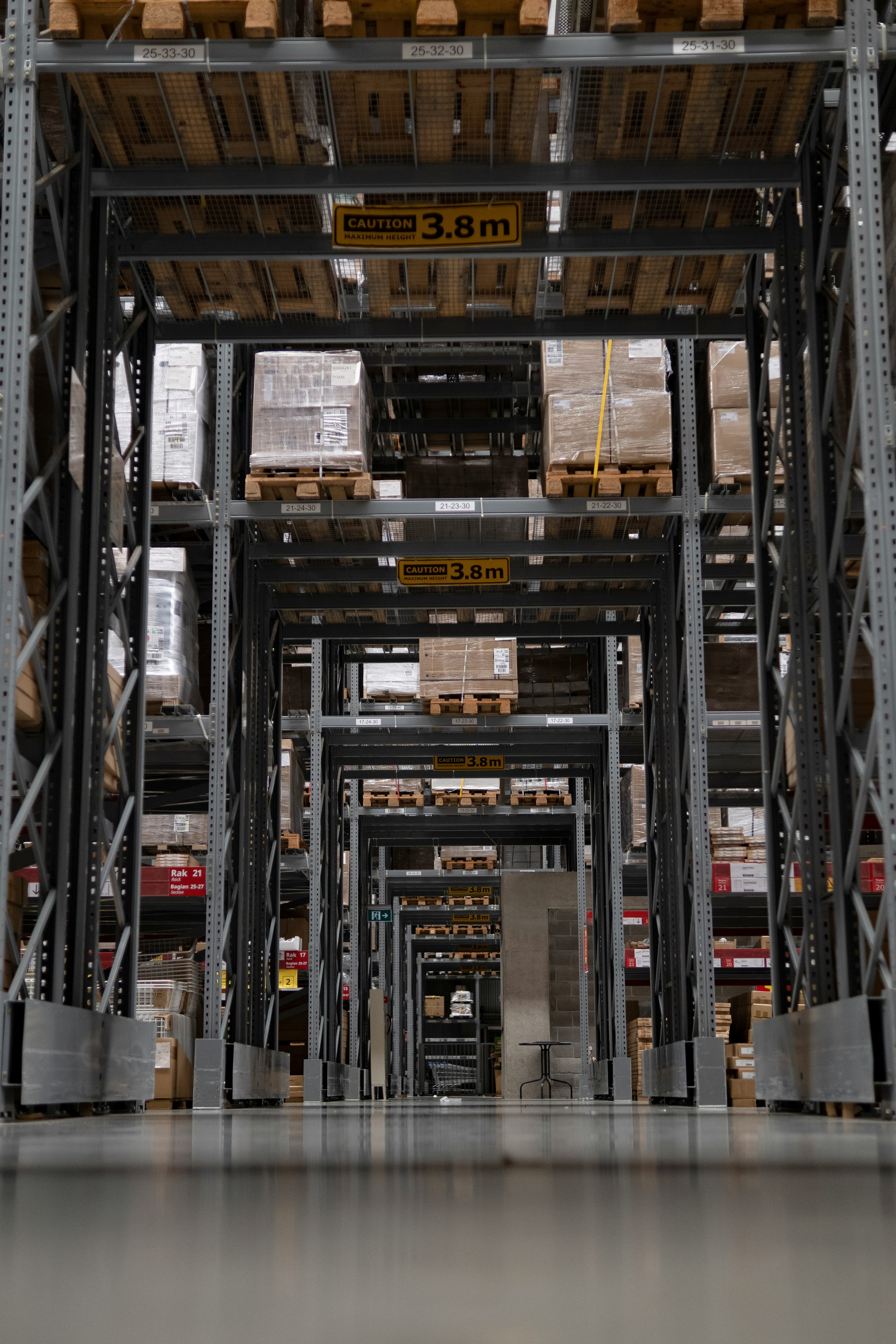
A fulfillment center is a warehouse operation that stores inventory, picks and packs orders, and ships products to customers on behalf of e-commerce brands. Instead of renting your own warehouse, hiring staff, and negotiating carrier rates, you send your inventory to a fulfillment center and they handle everything from the moment an order is placed until it arrives at the customer's door.
The term gets used interchangeably with "3PL warehouse," "distribution center," and sometimes "logistics center." The distinctions matter less than the core function: you sell, they ship.
How a Fulfillment Center Works
1. Receiving
Your inventory arrives at the fulfillment center—by parcel, LTL freight, or container. The warehouse receives the shipment, counts units, inspects for damage, and logs everything into a warehouse management system (WMS). Each SKU gets a location in the warehouse, optimized for pick efficiency.
2. Storage
Inventory sits on shelves, in bins, or on pallets until an order comes in. Storage is typically billed per pallet position, per shelf bin, or per cubic foot. Good fulfillment centers rotate stock (FIFO—first in, first out) and track lot numbers or expiration dates for products that require it.
3. Order Integration
When a customer places an order on your Shopify store, Amazon listing, or other sales channel, the order transmits to the fulfillment center's WMS—usually in real time via API or EDI. The order enters a pick queue.
4. Picking
A warehouse associate (or in some facilities, a robot) retrieves the items from their storage locations. Pick accuracy is critical: the industry benchmark is 99.5%+, and top fulfillment centers exceed 99.8%. Mistakes at this stage mean returns, refunds, and bad reviews.
5. Packing
Items are packed into the appropriate box or poly mailer with dunnage (protective material), packing slips, and any branded inserts you've specified. The packing station generates a shipping label and the package is staged for carrier pickup.
6. Shipping
Carriers—USPS, UPS, FedEx, DHL, regional carriers—pick up packages on a scheduled window, usually daily. The fulfillment center uploads tracking numbers to your sales channel, triggering the shipped notification to your customer.
7. Returns Processing
When a customer returns a product, it comes back to the fulfillment center. Staff inspect the item, determine if it's resellable, restock it or dispose of it, and update inventory counts. Returns processing is often billed separately.
Fulfillment Center vs. Warehouse vs. Distribution Center
| Facility Type | Primary Function | Who Uses It |
|---|---|---|
| Fulfillment center | Pick, pack, and ship individual orders (B2C) | E-commerce brands, DTC sellers |
| Warehouse | Store inventory in bulk | Manufacturers, wholesalers |
| Distribution center | Break bulk and route shipments to regions | Retailers, large distributors |
A traditional warehouse stores pallets and ships pallets. A fulfillment center breaks those pallets down into individual orders—each one, ship one. The operational complexity is completely different.
What Does a Fulfillment Center Cost?
Pricing models vary, but most fulfillment centers charge for:
| Fee Type | What It Covers | Typical Range |
|---|---|---|
| Receiving | Unloading, counting, putting away inventory | $25–50 per pallet or $0.25–0.50 per unit |
| Storage | Holding inventory on shelves or pallets | $8–40 per pallet/month or $0.50–1.50 per bin |
| Pick & pack | Retrieving items, packing, labeling | $2–5 per order + $0.50–1.00 per additional item |
| Shipping | Carrier postage (often discounted) | Varies by weight, zone, carrier |
| Returns | Inspecting, restocking returned items | $2–5 per return |
The total cost depends on your order profile: average items per order, product dimensions, shipping zones, and return rate. A simple single-SKU subscription brand pays less per order than a brand with 500 SKUs and complex kitting requirements.
For a detailed breakdown, see our fulfillment pricing guide.
When to Use a Fulfillment Center
You're shipping more than 100 orders per month
Below this threshold, self-fulfillment from your garage or office is often manageable. Above it, the time spent packing boxes starts to compete with time spent growing the business.
You're spending too much time on logistics
If you or your team spends hours each day printing labels, packing boxes, and standing in line at the post office, that's time not spent on product development, marketing, or customer relationships.
You need faster or more consistent shipping
A fulfillment center with a 2 PM cutoff and carrier pickups every day ships faster than you can driving to the post office when you have time. Consistency matters for customer expectations and marketplace metrics.
You're selling on multiple channels
Managing inventory across Shopify, Amazon, Walmart, and TikTok Shop gets complicated fast. A fulfillment center with multi-channel integration keeps inventory synced and ships orders from a single pool of stock.
You want to reduce shipping costs
Fulfillment centers ship thousands of packages daily, which gets them volume discounts from carriers. Those savings often offset or exceed the fulfillment fees—especially for heavier products or distant shipping zones.
When NOT to Use a Fulfillment Center
- Highly customized or made-to-order products. If every order requires custom fabrication, a fulfillment center can't help until the product is ready to ship.
- Extremely low volume. If you ship 10 orders a month, the minimum fees at most fulfillment centers won't make economic sense.
- Products requiring special handling you can't outsource. Some products need expertise that general fulfillment centers don't have—though specialized 3PLs exist for cosmetics, supplements, temperature-controlled goods, and more.
How to Choose a Fulfillment Center
Location
A fulfillment center in Los Angeles reaches the West Coast fast and handles port imports efficiently. A Midwest location minimizes average shipping distance nationally. Some brands use multiple fulfillment centers to reduce transit times everywhere.
Integrations
Does the fulfillment center connect to your sales channels? Shopify, Amazon, Walmart, WooCommerce, and other platforms should sync orders automatically. Manual CSV uploads are a recipe for errors and delays.
Specialization
Generic fulfillment centers handle most products fine. But if you sell regulated products—cosmetics, supplements, medical devices—you need a facility with the right certifications (FDA registration, cGMP compliance, etc.).
Transparency
Can you see real-time inventory levels? Order status? Shipping costs before they hit your invoice? A modern WMS portal should give you visibility into everything.
Terms
Watch for long-term contracts, setup fees, and minimum volume commitments. The best fulfillment partners earn your business monthly without locking you in.
Fulfillment Center FAQ
What's the difference between a fulfillment center and a 3PL?
A 3PL (third-party logistics provider) is the company; a fulfillment center is the facility. Most 3PLs operate one or more fulfillment centers.
How long does it take to get started with a fulfillment center?
Typically 1–2 weeks from signing to shipping. The steps: integrate your sales channels, ship inventory to the warehouse, confirm receiving, and go live.
Can I visit the fulfillment center?
Reputable fulfillment centers offer tours. If a provider won't let you see the facility, that's a red flag.
What happens to my inventory if I leave?
You own your inventory. The fulfillment center ships it back to you or to a new provider. Some charge fees for this; ask upfront.
Do fulfillment centers handle international shipping?
Many do. They can generate customs documentation, calculate duties, and ship via international carriers. Ask about their experience with your destination countries.
A fulfillment center turns your logistics from a daily headache into a line item. You focus on selling; they focus on shipping.
Ready to see how it works for your products? Get a quote from 3PLGuys—no minimums, no long-term contracts.