FBA (Fulfillment by Amazon) is Amazon's fulfillment program: you send inventory to Amazon's warehouses, and Amazon stores it, picks it, packs it, ships it, and handles customer service and returns for every order. In exchange, Amazon charges a fulfillment fee per unit sold plus monthly storage fees — and your listings become eligible for Prime's fast, free shipping badge.
That Prime badge is the reason FBA exists as a business decision and not just a logistics one. Prime members buy Prime-eligible products at dramatically higher rates, and the Featured Offer (formerly the Buy Box) heavily favors offers that can promise Prime delivery speeds. For most sellers, the question isn't "is FBA good?" — it's "which of my products belong in FBA, and what's the cheapest compliant way to get them there?"
This guide explains how FBA actually works, what it costs, where sellers get burned, and where prep centers and 3PLs fit into the picture.
How Does Amazon FBA Work?
The FBA lifecycle has six stages. Understanding each one matters, because most FBA problems — stranded inventory, check-in delays, chargebacks for prep defects — happen at specific stages.
1. You Create Listings and Enroll Products in FBA
In Seller Central, you list your products and set their fulfillment channel to FBA. Amazon assigns each product an FNSKU — a fulfillment network SKU that identifies your inventory of that product, as opposed to another seller's units of the same item.
2. You Prep Products to Amazon's Requirements
Before Amazon accepts inventory, it must meet Amazon's prep requirements: FNSKU labels applied and scannable, poly-bagging for anything exposed or in fabric, suffocation warnings on bags over a certain size, bubble wrap for fragile items, expiration dating rules for consumables, and set/bundle labeling for multipacks. Prep defects are one of the most common reasons shipments get delayed, refused, or charged unplanned service fees.
This is the stage where sellers use an Amazon FBA prep service — a warehouse that receives goods (often straight from the factory or port), inspects them, applies compliant labels and packaging, and forwards cartons to Amazon.
3. You Create a Shipping Plan
Amazon tells you which fulfillment centers want your inventory and in what quantities. You (or your prep center) build cartons or pallets to spec, print Amazon's carton labels, and book freight. Amazon frequently splits a single shipment across multiple destination warehouses.
4. Amazon Receives and Stores Your Inventory
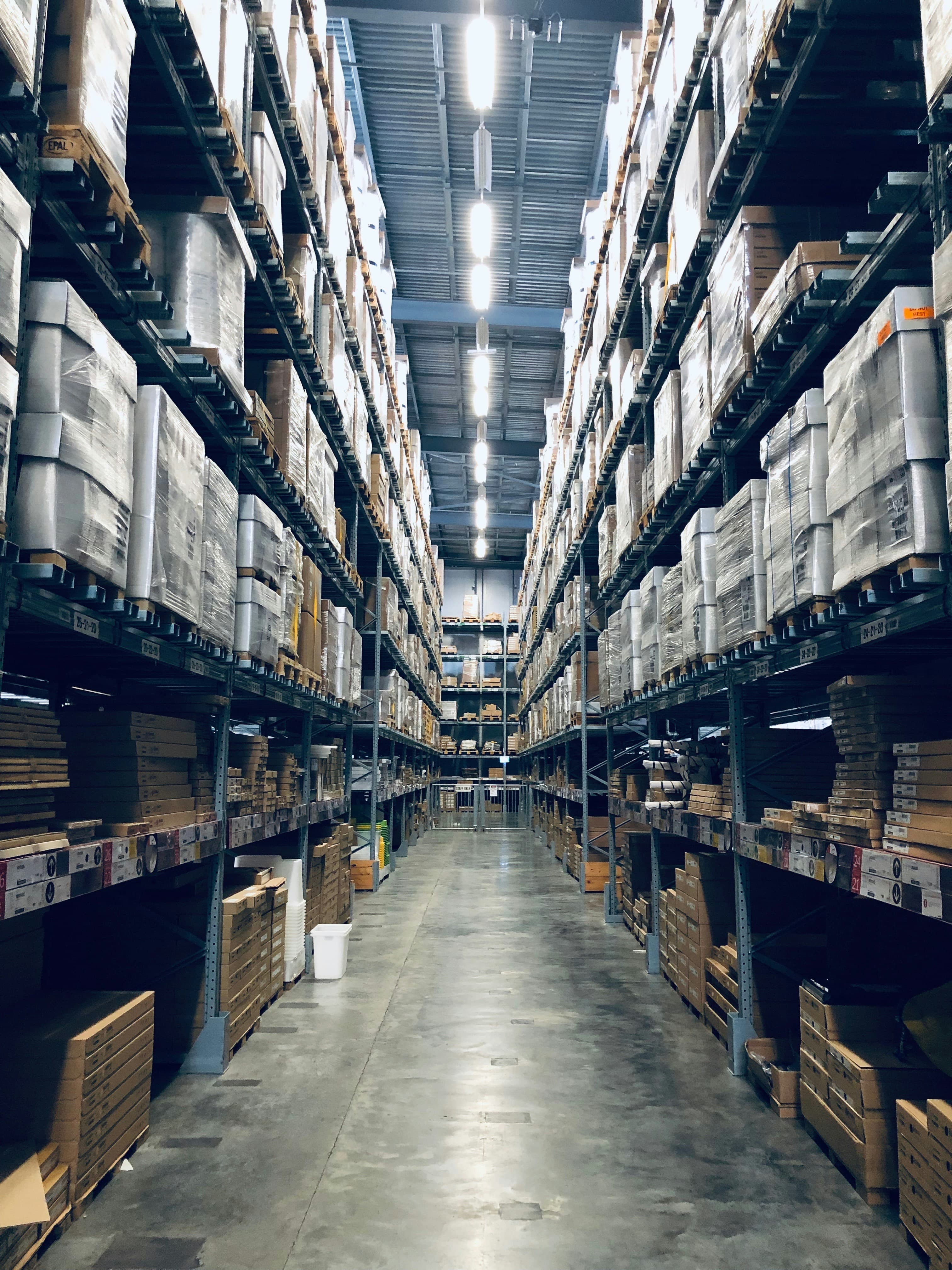
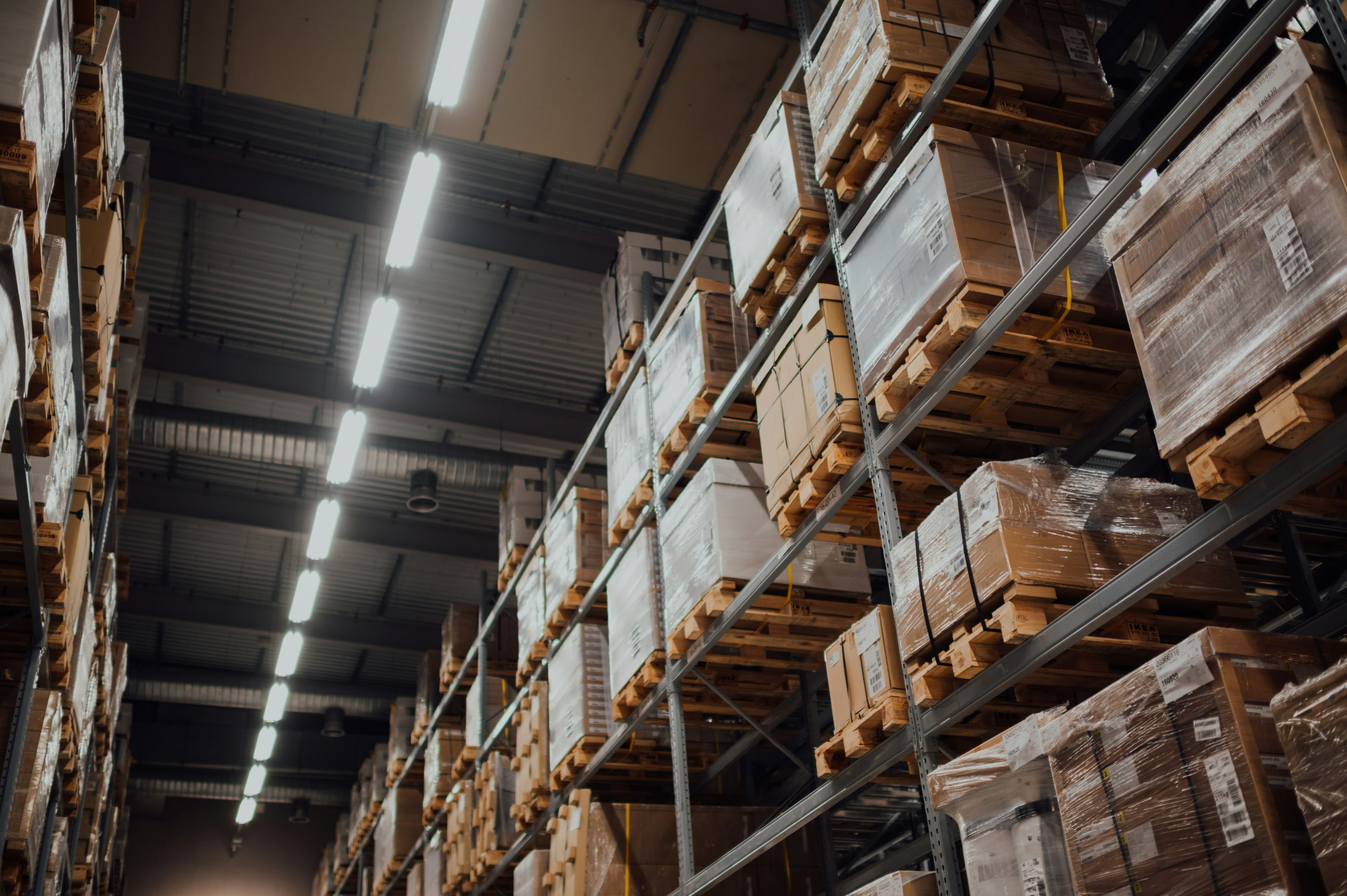
Once cartons check in at Amazon's fulfillment centers, units become available for sale. Amazon distributes inventory across its network so it sits close to buyers. From this point you pay monthly storage fees on every cubic foot your products occupy.
5. Customers Order, Amazon Ships
When an order comes in, Amazon picks the unit from the nearest fulfillment center, packs it in Amazon-branded packaging, and ships it at Prime speed. Amazon also handles delivery questions, refunds, and most customer service for the order.
6. Amazon Handles Returns
Returned units flow back into Amazon's network. Sellable returns re-enter your inventory; damaged or customer-worn units are flagged unfulfillable, and you decide whether Amazon should dispose of them or return them to you (many sellers route removals to a 3PL for inspection and re-prep rather than paying to destroy sellable goods).
What Does FBA Cost?
Amazon's FBA fees are public and fall into a few buckets. Exact rates change (usually annually), but the structure is stable:
| Fee | What It Covers | How It's Charged |
|---|---|---|
| Fulfillment fee | Pick, pack, ship, customer service, returns handling | Per unit sold, based on size tier and weight |
| Monthly storage fee | Warehouse space | Per cubic foot, higher in Q4 |
| Aged inventory surcharge | Inventory sitting too long | Per cubic foot, escalating past 180+ days |
| Referral fee | Amazon's commission for the sale (not FBA-specific) | Percent of sale price, category-dependent |
| Inbound placement / prep service fees | Shipment splits, unplanned prep Amazon performs for you | Per unit, situational |
| Removal/disposal fees | Getting inventory back out of FBA | Per unit |
Two structural things matter more than any individual rate:
- FBA fees are driven by size and weight. A few ounces or a slightly smaller box can move a product into a cheaper size tier. Dimensional discipline is one of the highest-ROI activities in FBA.
- Storage is cheap until it isn't. The monthly rate looks trivial, but Q4 rates jump sharply, and aged-inventory surcharges punish slow movers hard. FBA rewards fast-turning inventory and penalizes using Amazon as long-term storage — which is why many sellers hold bulk stock at a 3PL and feed Amazon in smaller replenishments.
To model actual numbers for your product — fees, margin, and profit per unit — use our free FBA calculator. Enter dimensions, weight, and price, and it breaks down referral fees, fulfillment fees, storage, and net margin.
FBA vs. FBM: What's the Difference?
FBM (Fulfilled by Merchant) means you list on Amazon but ship orders yourself — from your garage, your warehouse, or a 3PL. The comparison in brief:
| FBA | FBM | |
|---|---|---|
| Who ships | Amazon | You or your 3PL |
| Prime badge | Automatic | Only via Seller Fulfilled Prime (hard to qualify) |
| Fees | Fulfillment + storage fees | Your own fulfillment costs |
| Control over packaging | None (Amazon boxes) | Full branding control |
| Multi-channel | Amazon-focused | Same inventory serves your site, retail, etc. |
| Oversized/slow-moving items | Storage fees punish | Often cheaper |
| Account risk | Amazon controls your inventory | You control your inventory |
Most established sellers land on a hybrid: FBA for fast-turning, competitively priced products where the Prime badge drives conversion, and FBM (usually through a 3PL) for oversized items, slow movers, and multi-channel inventory. We cover the decision in depth in FBA vs. FBM vs. 3PL.
The Parts of FBA Nobody Advertises
FBA is genuinely excellent at what it does — but going in with clear eyes saves money:
- Prep compliance is on you. Amazon receives millions of cartons; anything mislabeled or under-prepped gets delayed, refused, or "fixed" by Amazon at premium per-unit fees.
- Shipment splits add freight cost. Amazon routinely wants one PO spread across warehouses in different states, or charges inbound placement fees to skip the splits.
- Storage limits and capacity limits exist. Your restock capacity depends on sales velocity and IPI score. New sellers and seasonal brands can find themselves unable to send in the inventory they need.
- Long-term storage is a trap. Aged-inventory surcharges compound; using FBA as your only warehouse is one of the most expensive mistakes in the ecosystem.
- Returns attrition is real. A portion of FBA returns come back unsellable, and reimbursement rules put the burden on you to audit and claim.
- You can't control the unboxing. Every order arrives in Amazon packaging. For brands where presentation matters, that's a real trade-off.
None of these kill the model. They explain the pattern almost every scaled FBA operation converges on: keep a lean, fast-turning stock inside Amazon, and keep the rest of your inventory somewhere you control.
When Does FBA Make Sense?
FBA is usually the right call when:
- Your product is standard-size and under a few pounds — fulfillment fees are very competitive at small sizes
- You sell in a competitive category where the Prime badge decides the Featured Offer
- Your inventory turns fast (roughly 3+ turns per year), so storage fees stay small
- You want hands-off operations and Amazon is your primary channel
FBA gets expensive or risky when products are oversized or heavy, seasonal with long storage tails, hazmat-restricted, or when Amazon is one channel among several and you'd otherwise split inventory pools.
Where a Prep Center or 3PL Fits Into FBA
For most sellers past the garage stage, the winning architecture is a supply chain with a buffer between the factory and Amazon:
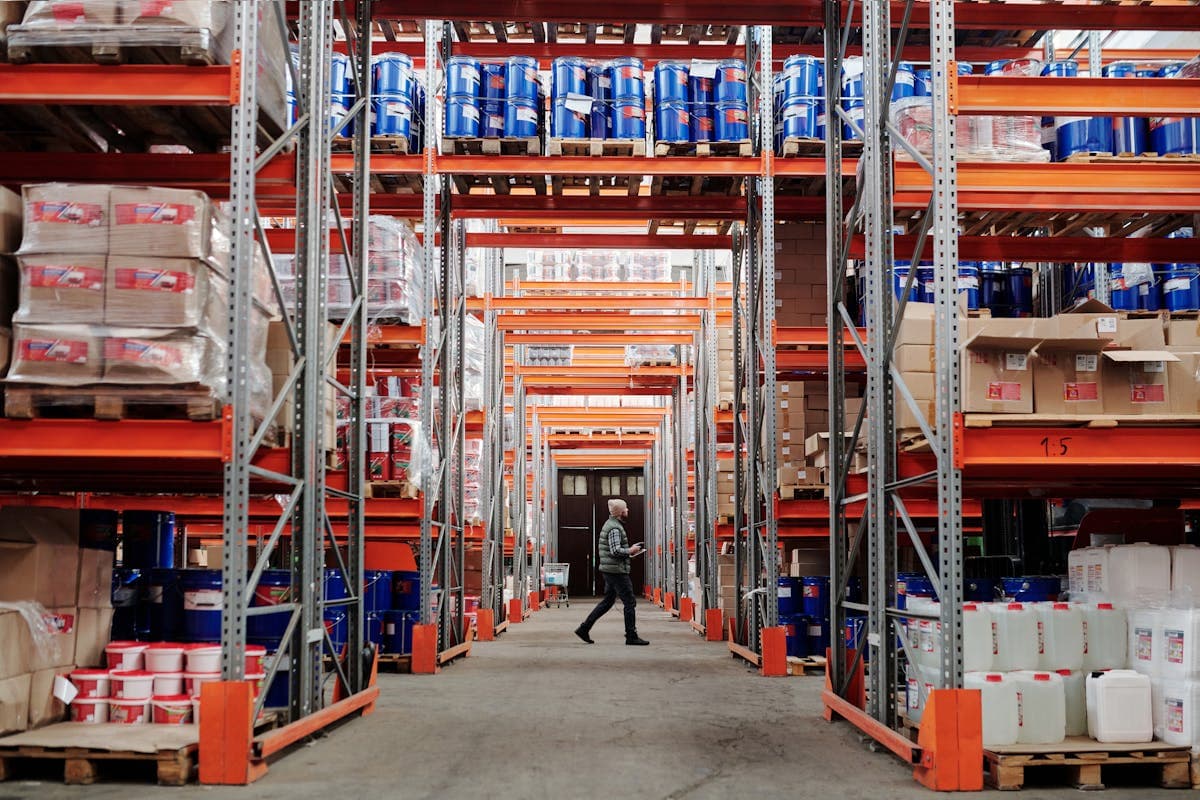
- Factory or port → prep warehouse. Inventory lands at a warehouse near the ports (ours is in Paramount, CA, about 15 minutes from the Port of Long Beach), gets inspected, counted, and stored as bulk stock — at pallet storage rates, not Amazon cube rates.
- Prep and forward on demand. When Amazon capacity and sales velocity call for it, the warehouse preps a replenishment — FNSKU labels, poly bags, bundles, carton labels — and forwards it to Amazon's fulfillment centers.
- Everything else ships from the 3PL. Oversized SKUs, multi-channel orders from your own site, wholesale, and removals/returns processing all run from the same inventory pool.
This is exactly what our Amazon FBA prep service does. As an Amazon SPN-certified prep center, we handle inspection, FNSKU labeling, poly-bagging, bundling, carton forwarding, and removals processing — so Amazon's warehouses hold your next few weeks of sales, not your whole year of inventory. Sellers comparing this model against sending everything straight into Amazon can start with the numbers in our Amazon 3PL vs. FBA breakdown.
FAQ
What does FBA stand for?
FBA stands for Fulfillment by Amazon — Amazon's program where sellers store inventory in Amazon's fulfillment centers and Amazon handles storage, shipping, customer service, and returns for their orders.
Is FBA only for products sold on Amazon?
Primarily, yes. Amazon offers Multi-Channel Fulfillment (MCF), which ships FBA inventory for orders from other channels, but fees are higher than standard FBA and packages ship in Amazon packaging — which is why most multi-channel brands fulfill non-Amazon orders through a 3PL instead.
How much money do you need to start FBA?
The main costs are inventory, Amazon's monthly professional seller account, and prep/freight to get goods into the network. The bigger question is unit economics: before ordering inventory, model your fees and margin per unit with an FBA calculator so you know the product is profitable after referral, fulfillment, and storage fees.
Does Amazon prep products for you?
Amazon offers optional prep and labeling services at per-unit fees, but they're limited to certain prep types, and unplanned prep (when Amazon catches non-compliant inventory) is charged at premium rates. Most sellers prep themselves or use an FBA prep center near the ports to keep per-unit costs down and avoid check-in delays.
What happens if my products don't meet FBA requirements?
Amazon may refuse the shipment, charge unplanned prep service fees, or flag inventory as problem-received. Repeated violations can restrict your inbound privileges. A prep checklist — like our FBA prep requirements checklist — or a prep partner that guarantees compliance prevents most of these outcomes.
Can I use FBA and a 3PL at the same time?
Yes — that's the standard architecture for scaled sellers. Bulk inventory lives at the 3PL, Amazon holds a rolling replenishment buffer, and the 3PL handles prep, forwarding, oversized SKUs, other sales channels, and returns. You get Prime economics on Amazon without paying Amazon storage rates on your entire inventory position.
Selling on Amazon and want prep, storage, and forwarding handled? Our SPN-certified team preps and ships FBA inventory daily from Paramount, CA — see our Amazon FBA prep services or get a quote.