Shipping a 75-pound treadmill is nothing like shipping a t-shirt. Different carriers, different pricing models, different customer expectations — and different failure modes that can destroy your margins and reviews.
Large item fulfillment requires specialized handling that most e-commerce 3PLs simply aren't built for. The parcel networks designed for small packages break down when products exceed dimensional thresholds. What works at 20 pounds fails spectacularly at 150 pounds.
At 3PLGuys, we handle oversized products daily from our 250,000 sq ft Los Angeles facility — everything from gym equipment to patio furniture to industrial components. Here's what actually matters for large item fulfillment in 2026.
What Counts as a Large Item in Shipping?
Carriers define "large" differently, but industry standards generally categorize oversized products as:
- Weight over 50 lbs (individual package)
- Dimensional weight over 70 lbs (calculated from LxWxH ÷ 139)
- Any single dimension exceeding 48 inches
- Combined length + girth over 130 inches
When products exceed these thresholds, they shift from parcel pricing to freight pricing. That's where costs spike and complexity multiplies.
According to the National Motor Freight Traffic Association (NMFTA), freight class assignments based on density, stowability, handling, and liability determine pricing. A lightweight but bulky item like a bean bag chair might ship in Class 150, while a dense equipment motor sits in Class 65 — with dramatically different per-pound rates.
How Much Does Large Item Shipping Cost?
Large item shipping costs 3-8x more per pound than standard parcel shipping. Here's what drives the pricing:
| Factor | Impact on Cost |
|---|---|
| Freight Class | 18 classes from 50-500, each with different rates |
| Zone/Distance | Cross-country costs 40-60% more than regional |
| Residential Delivery | $50-150 surcharge vs commercial |
| Liftgate Service | $75-125 per delivery |
| Inside Delivery | $100-200+ per delivery |
| White-Glove Setup | $150-400+ per delivery |
Real example: A 90-lb elliptical machine from Los Angeles to Chicago:
- LTL freight to commercial: $85-120
- LTL freight to residential with liftgate: $180-250
- White-glove delivery with assembly: $300-450
The difference between professional and amateur large item fulfillment is knowing which service level matches customer expectations without over-spending.
Why Do Large Items Need Specialized 3PL Handling?
Standard e-commerce fulfillment centers optimize for small packages. Their racking isn't rated for heavy products. Their staff isn't trained for equipment operation. Their carrier relationships don't include freight networks.
Large item fulfillment requires:
Heavy-Duty Storage Infrastructure
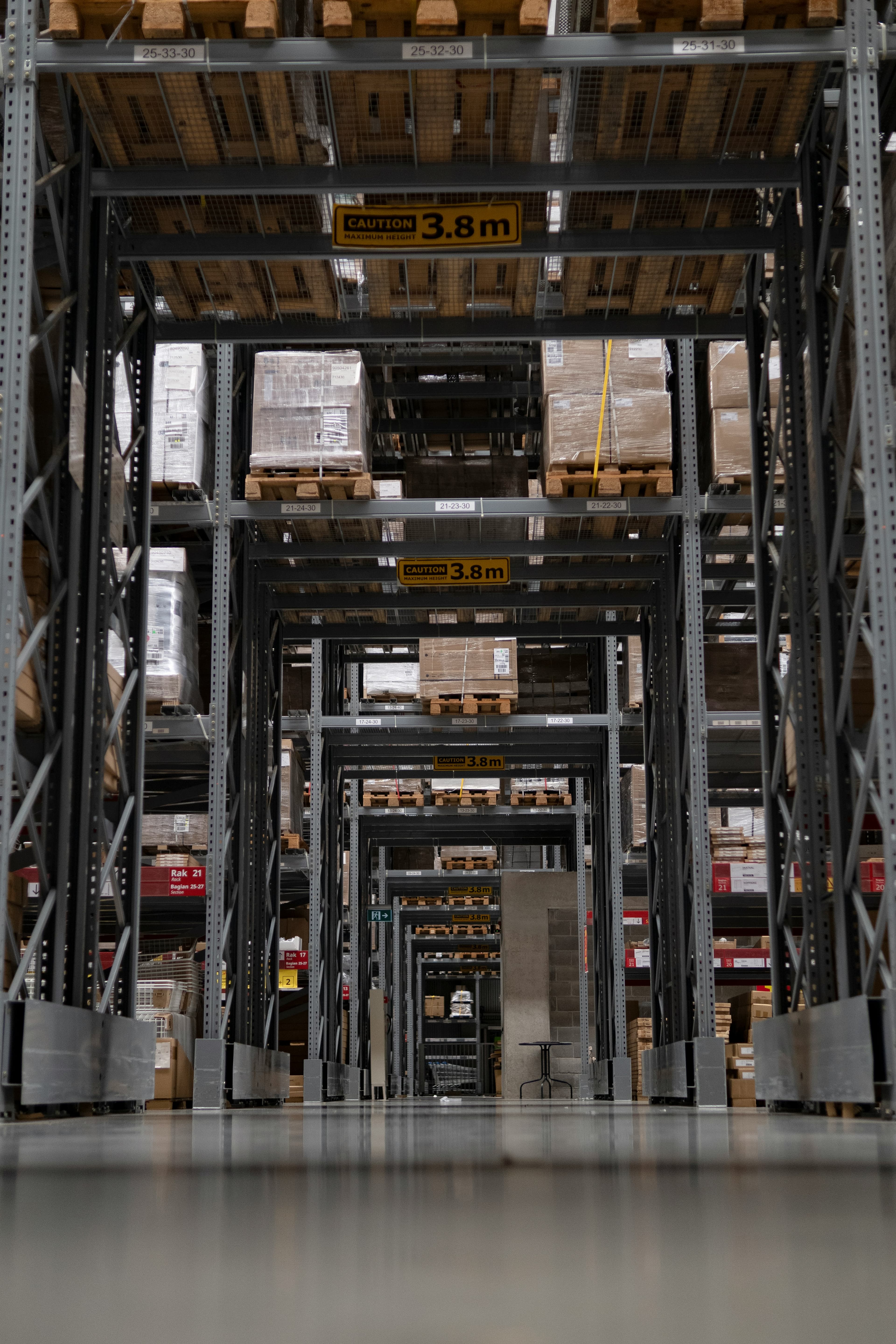
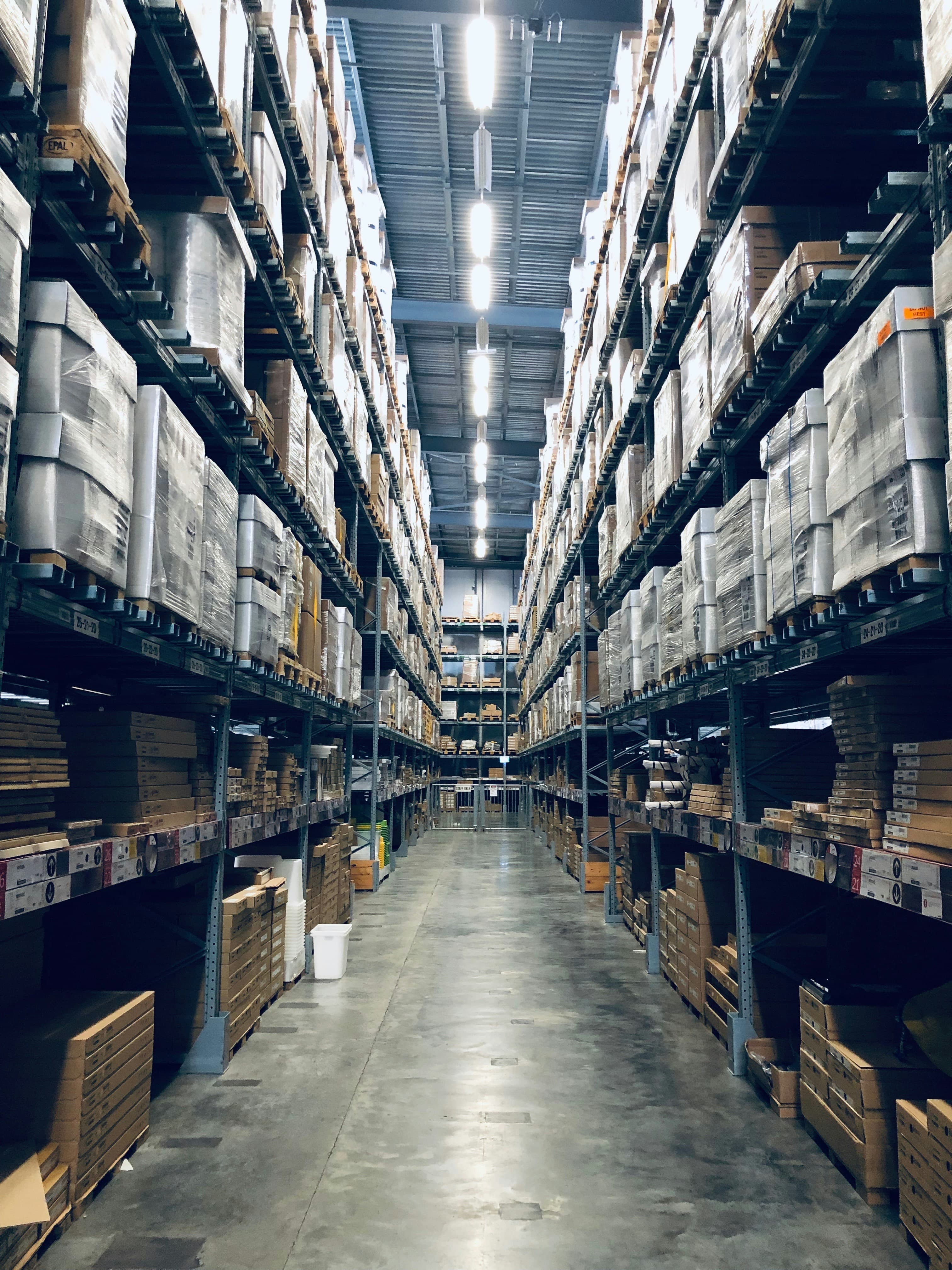
Pallet racking rated for 2,500+ lbs per level rather than the 500-lb shelving in standard fulfillment centers. Floor storage zones for products that can't be racked. Clear height for storing items that need to stand upright.
Specialized Equipment
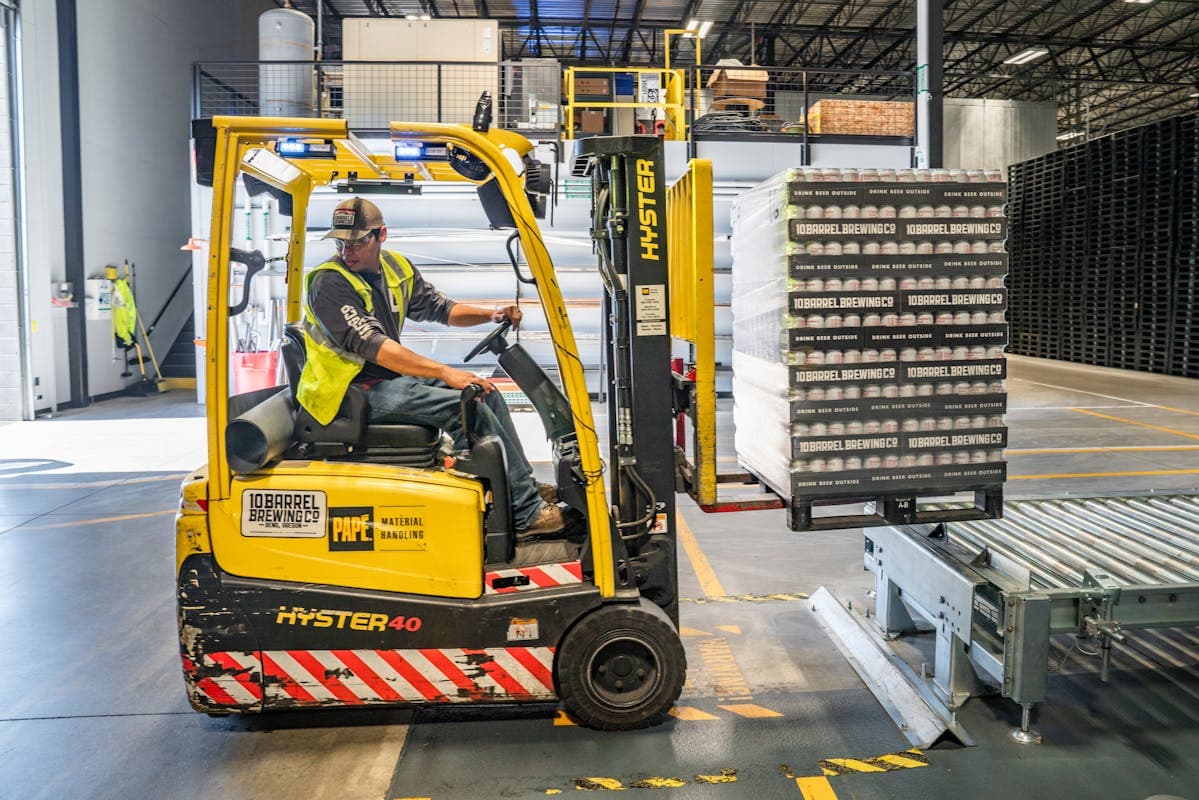
Forklifts with 5,000+ lb capacity rather than pallet jacks. Furniture dollies, appliance straps, and moving blankets. Stretch wrap machines for pallet building. Loading dock doors sized for LTL freight trailers.
Freight Carrier Relationships
Volume discounts with LTL carriers like Old Dominion, XPO, Saia, and Estes. Understanding of freight class optimization. Ability to book liftgate, appointment delivery, and white-glove services.
Trained Labor
Staff who understand proper lifting techniques for heavy items. Experience with furniture padding and protection. Knowledge of stacking patterns that prevent transit damage.
What Shipping Options Exist for Oversized Products?
Depending on weight, size, and destination, large items ship through different channels:
Parcel Oversize
UPS and FedEx accept packages up to 150 lbs and 165 inches (L + 2W + 2H). Pricing includes dimensional weight calculations and oversize surcharges of $120-200+. Best for items 50-100 lbs with moderate dimensions.
LTL Freight (Less Than Truckload)
Palletized shipments sharing trailer space with other freight. Most cost-effective for 150-500 lb shipments. Requires freight class assignment and BOL documentation. Transit times of 3-7 business days typical.
White-Glove Delivery
Premium service including inside delivery, unpacking, assembly, and packaging removal. Essential for furniture and fitness equipment sold to consumers. Pricing of $150-400+ per delivery but prevents damage claims and negative reviews.
Dedicated/FTL Freight
Full truckload shipping for large volumes or extremely oversized items. Required when single items exceed LTL handling capacity. Cost-effective when shipping multiple pallets to same destination.
How to Reduce Large Item Shipping Costs
Brands shipping oversized products can optimize costs through several strategies:
1. Optimize Packaging
Every cubic inch matters with dimensional weight pricing. Reducing box dimensions by 2 inches on each side can drop freight class and cut costs 15-20%. Use fitted foam inserts instead of loose fill to minimize package volume.
2. Choose Strategic Warehouse Location
Shipping from Los Angeles reaches 85% of US addresses in 2-day ground transit. Compare that to midwest locations requiring 3-4 days for coastal deliveries. Proximity to ports also matters for imported oversized goods — our facility sits 15 minutes from the Port of Long Beach.
3. Consolidate Shipments
Multiple large items to the same customer ship cheaper on one pallet than individual packages. 3PLs with order management systems can automatically consolidate multi-item orders.
4. Negotiate Volume Rates
Shipping 50+ large items monthly gives leverage for freight rate negotiations. Established 3PLs pass volume discounts to clients that individual brands can't access independently.
5. Match Service Level to Product
Not every product needs white-glove delivery. Gym equipment benefits from setup service. Industrial components going to businesses need only dock delivery. Over-specifying service wastes money.
What Should Large Item Brands Look for in a 3PL?
When evaluating fulfillment partners for oversized products, verify these capabilities:
Storage capacity: Do they have floor space and heavy-duty racking for your products? Can they handle your peak inventory levels?
Equipment: Forklifts, pallet jacks rated for your heaviest products? Loading docks compatible with freight trailers?
Carrier network: Relationships with LTL carriers? Volume discounts you can access? White-glove delivery options?
Experience: Have they handled similar products? Can they show damage rates and transit times for oversized shipments?
Location: Where are they relative to your customers? Import-heavy brands benefit from port proximity.
Technology: Can their WMS handle serial number tracking, assembly instructions, and freight documentation?
How Does 3PLGuys Handle Large Item Fulfillment?
Our Los Angeles facility was designed for versatility. We handle:
- Fitness equipment up to 300+ lbs per unit
- Patio furniture requiring assembly and kitting
- Medical devices with serialization requirements
- Industrial components shipping to businesses nationwide
Key capabilities:
- 20+ loading dock doors for freight carriers
- Forklifts rated for 6,000 lb capacity
- Floor storage zones for non-rackable items
- White-glove delivery partnerships
- LTL volume rates with major carriers
- Real-time tracking through our WMS
Frequently Asked Questions
Can Amazon FBA handle large items?
Yes, but with restrictions. FBA's "Large Bulky" size tier covers items 18-60 lbs up to 59 inches longest side. Fees start around $9.73 per unit plus monthly storage fees that spike during Q4. Items over 60 lbs require FBA Heavy & Bulky, available only in select categories.
What's the difference between LTL and white-glove delivery?
LTL freight delivers to the curb or dock — the recipient is responsible for unloading and bringing items inside. White-glove includes inside delivery, unpacking, assembly if applicable, and packaging removal. LTL costs $80-250; white-glove costs $150-400+.
How do I determine freight class for my products?
Freight class is based on density (weight ÷ cubic feet), stowability, handling difficulty, and liability. NMFTA publishes the official classification guide. Common classes: furniture (Class 125-200), fitness equipment (Class 92.5-150), appliances (Class 65-100). Your 3PL should handle classification.
What causes damage during large item shipping?
Top causes: inadequate packaging (products shift inside boxes), improper palletizing (items fall during transit), mishandling at cross-dock facilities, and incorrect stacking in trailers. Prevention requires proper cushioning, corner protectors, stretch wrap, and "Do Not Stack" labels where needed.
How fast can large items ship?
LTL freight typically delivers in 3-7 business days depending on distance. Expedited LTL can achieve 2-3 days at premium pricing. White-glove delivery adds 1-2 days for appointment scheduling. From our Los Angeles location, 2-day ground reaches most western states.
Is drop shipping possible for large items?
Yes, but it requires manufacturer willingness and capable logistics. Many furniture and equipment manufacturers offer drop ship programs. The challenge is quality control — you can't inspect products before they reach customers. Damage claims and customer service complexity increase.
The Bottom Line
Large item fulfillment isn't a scaled-up version of small parcel shipping. It's a fundamentally different operation requiring specialized infrastructure, carrier relationships, and expertise.
The 3PLs that excel at oversized products understand freight class optimization, have the equipment to handle heavy goods safely, and maintain relationships with LTL and white-glove carriers that small-package specialists don't need.
For brands selling furniture, fitness equipment, appliances, or industrial products, choosing a fulfillment partner experienced with large items prevents the damage claims, cost overruns, and delivery failures that destroy margins and reputation.
Ship Large Items Without the Headaches
Our Los Angeles facility handles oversized products daily — fitness equipment, furniture, industrial components. LTL freight expertise, white-glove delivery options, and rates your brand can't get alone.
Get a Quote →