Quick Answer: Contract logistics is a long-term, dedicated logistics partnership where a 3PL designs, builds, and operates custom fulfillment for a specific client — with dedicated space, named teams, custom SLAs, and multi-year contracts. Transactional fulfillment uses shared warehouses, pooled resources, and per-unit pricing. Contract logistics typically makes sense for brands with $1M+ annual logistics spend, retail compliance requirements, or operational complexity that doesn't fit shared workflows. See contract logistics services for what dedicated B2B operations actually include.
Most brands hear "3PL" and think one thing — a warehouse that picks, packs, and ships their orders. In practice, the 3PL industry runs across a spectrum from transactional fulfillment (think ShipMonk, ShipBob, Deliverr) at one end to enterprise contract logistics (DHL Supply Chain, GXO, Ryder) at the other. The gap between them is enormous.
Picking the wrong end of the spectrum costs money in two directions. Under-serving with transactional fulfillment when you need contract logistics means chargebacks, capacity issues, and operational fires. Over-serving with contract logistics when you need transactional fulfillment means paying for dedicated infrastructure you don't need. This guide explains the difference and how to figure out where your business actually fits.
What Is Contract Logistics?
Contract logistics is a long-term, dedicated logistics partnership where a 3PL designs, builds, and operates a custom fulfillment program for a single client or small set of clients. The term "contract" reflects the multi-year commitments these arrangements require — typically 3-5 year contracts with annual price escalation, custom SLA structures, and dedicated infrastructure investment by the 3PL.
A contract logistics engagement typically includes:
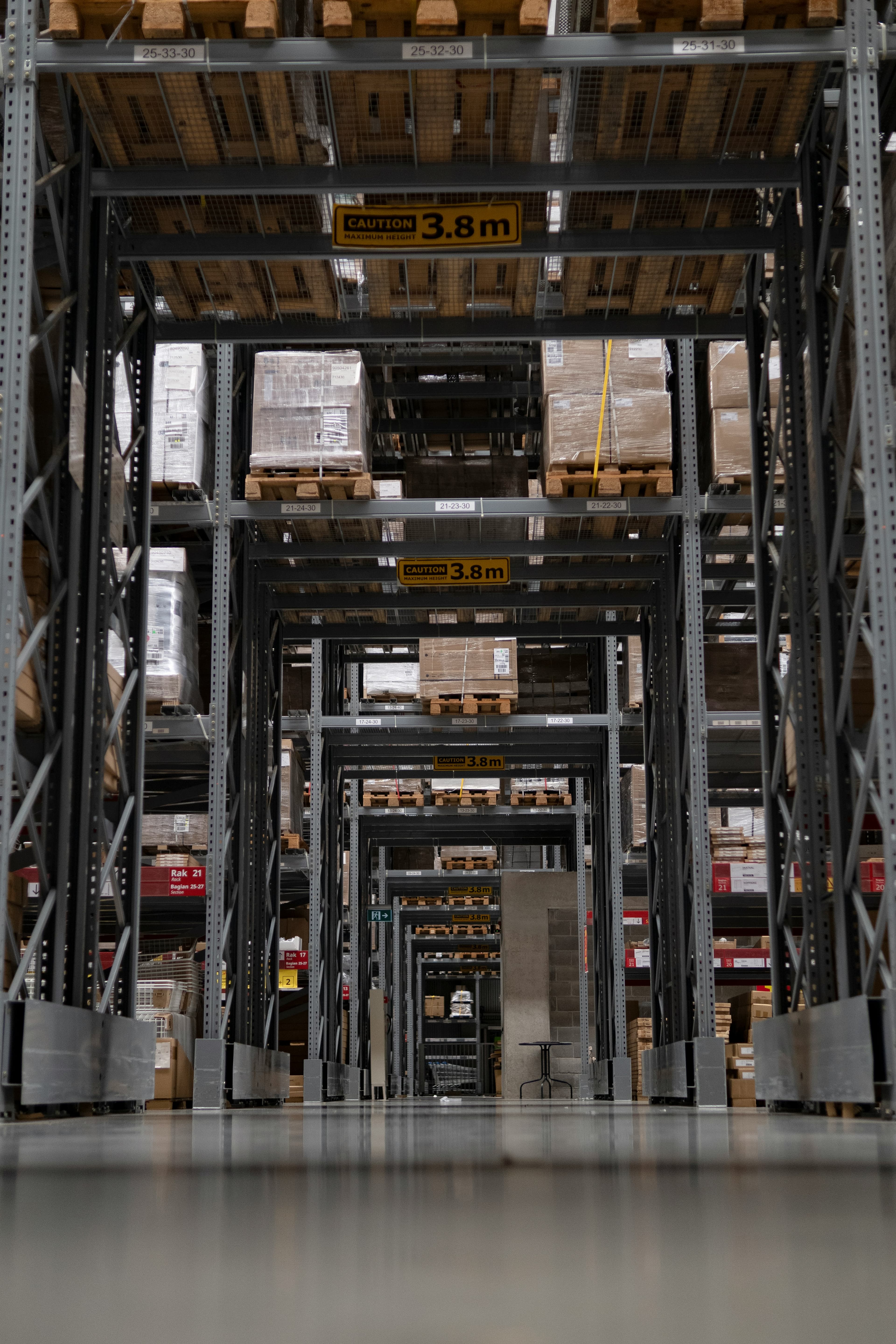
- Dedicated warehouse space — fenced or partitioned zones within a 3PL facility, or in some cases dedicated buildings
- Assigned labor pools — warehouse team members who only work on this client's operation
- Custom workflows — pick paths, pack stations, value-added service stations designed for the client's specific products
- Branded operations — custom packaging, labels, kitting stations branded for the client
- Custom SLA structures — KPIs with performance penalties and gainshare arrangements
- Implementation team — dedicated project managers running 60-90 day onboarding
- Dedicated account management — named senior people responsible for the relationship
This is the model used by enterprise B2B brands shipping to major retailers, regulated industries like pharmaceuticals and medical devices, and high-volume CPG companies with omnichannel distribution.
What Is Transactional Fulfillment?
Transactional fulfillment is the shared-warehouse 3PL model — multiple clients share the same physical space, the same labor pool, and standardized workflows. Pricing is per-unit transactional (per order shipped, per pallet stored, per inbound received) with no fixed monthly commitment beyond a baseline.
A transactional fulfillment relationship typically includes:
- Shared warehouse space — your inventory mixes with other clients' in racking
- Pooled labor — warehouse team members work across multiple clients
- Standardized workflows — same pick/pack process for everyone, with some customization
- Generic packaging — typically branded box options but not unlimited customization
- Template pricing — published rate cards with volume tiers
- Self-service onboarding — typically 2-6 weeks to operational
- Pooled account management — support routed through tickets, with account reviews quarterly
This is the dominant model for e-commerce fulfillment, smaller-scale brands, brands with simple operational needs, and businesses where flexibility matters more than dedicated control.
The Core Differences
| Dimension | Contract Logistics | Transactional Fulfillment |
|---|---|---|
| Pricing model | Fixed monthly + variable transactions | All variable per-unit |
| Warehouse space | Dedicated zones or buildings | Shared with multiple clients |
| Labor | Dedicated team members | Pooled across clients |
| Workflows | Custom designed | Standardized with options |
| Contract length | 3-5 year typical | Month-to-month to 1 year |
| Minimum scale | $1M+ annual logistics spend | None — works at low volume |
| Onboarding time | 60-90 days | 2-6 weeks |
| Account management | Dedicated, named senior staff | Pooled support, periodic reviews |
| Branded operations | Extensive customization possible | Limited custom packaging |
| SLA structure | Custom KPIs with penalties/gainshare | Standard SLAs, limited recourse |
| Best for | Retail vendors, CPG, regulated industries | E-commerce, smaller brands, simple ops |
When Contract Logistics Makes Sense
Contract logistics involves real upfront investment and long-term commitment. It's not the right choice for every business. The signals that point toward contract logistics:
You Have Meaningful Volume
Contract logistics economics work when there's enough volume to justify dedicated infrastructure. Rough threshold: $1M+ annual logistics spend, 1,000+ pallets in dedicated storage, or 50,000+ orders per month. Below these levels, the fixed costs of dedicated space and labor outweigh the benefits.
You Have Retail Compliance Requirements
If you're shipping to Walmart, Target, Costco, Amazon Vendor Central, Kroger, or other major retailers, you have routing guide compliance, EDI requirements, OTIF performance standards, and chargeback exposure. Contract logistics provides the dedicated retail compliance specialists, custom workflows, and SLA structures that retail vendor operations require.
You Have Operational Complexity
Some operations don't fit shared workflows. Examples:
- Regulated products (FDA-registered, pharmaceuticals, peptides, controlled substances) with chain-of-custody requirements
- High-value goods requiring enhanced security protocols
- Complex kitting and assembly at scale
- Branded unboxing experiences for premium brands
- Custom QC processes that require dedicated stations and trained teams
- Temperature-controlled operations with continuous monitoring
When your operations are unusual enough that they don't fit a standard pick-and-pack template, dedicated infrastructure becomes necessary rather than optional.
Your Volume Is Predictable
Contract logistics uses fixed-cost pricing for dedicated infrastructure. This works when volume is predictable — you know you'll ship roughly the same volume each month, with predictable seasonal variations. It works poorly when volume swings wildly month-to-month, because you're paying for capacity even when you don't use it.
You Need Brand Control
For luxury, premium, and brand-experience-focused businesses, every aspect of fulfillment matters. The box, the fill material, the insert cards, the packing experience — they're all part of the brand. Shared fulfillment can offer custom packaging but not the level of control that comes with dedicated operations where you can specify every detail.
You Have Strategic Reasons for Long-Term Partnership
Contract logistics works best when both sides are committed for the long term. The 3PL invests in dedicated infrastructure, training, and process engineering. The client commits to multi-year volume. This shared investment creates better long-term outcomes than transactional relationships but requires both parties to think strategically.
When Transactional Fulfillment Makes Sense
Transactional fulfillment is the right choice for most early-stage and mid-market brands. The signals:
You're Below the Volume Threshold
Brands shipping 1,000-10,000 orders per month or holding 50-500 pallets typically can't justify dedicated infrastructure. Transactional fulfillment lets you access professional 3PL operations without paying for fixed dedicated overhead.
Your Operations Fit Standard Workflows
E-commerce fulfillment for Shopify, Amazon FBA prep, basic kitting, standard pick-and-pack with branded boxes — these fit shared workflows. You get the benefits of 3PL operations without needing custom infrastructure.
Your Volume Is Variable
Seasonal businesses (Q4-heavy, summer-focused), brands testing new products, and businesses in growth phases benefit from transactional pricing. You pay for what you use rather than fixed dedicated capacity.
You Want Flexibility
Month-to-month to 1-year contracts let you adjust as your business changes. If your needs shift dramatically, you can switch providers without breaking expensive contracts. The trade-off: no long-term price stability or capacity guarantees.
You're Pre-Retail
If you haven't entered retail distribution yet, you probably don't need EDI integration, retailer routing guide compliance, or chargeback prevention infrastructure. Transactional fulfillment for D2C and Amazon FBA can serve you well until retail relationships develop.
The Hybrid Approach
Many real-world arrangements blend both models. Common hybrid patterns:
Dedicated for B2B + shared for D2C: Retail vendor operations (Walmart, Target, etc.) run in dedicated zones with custom workflows and SLAs. Direct-to-consumer fulfillment for Shopify or Amazon FBA runs in shared operations at the same facility. This optimizes total cost — you pay for dedicated only where it matters.
Dedicated core + shared overflow: Predictable baseline volume in dedicated zones with fixed-cost pricing. Seasonal peaks or unexpected volume flexes into shared overflow capacity. You don't pay dedicated overhead for inventory that doesn't need it.
Phased transition: Start with transactional fulfillment to validate the partnership, then transition to dedicated as volume grows and complexity increases. The relationship history makes the transition smoother than starting fresh.
How to Decide Which You Need
Run through these questions to figure out where your business fits:
- What's your annual logistics spend? Under $1M → transactional fits. Over $1M with growth → consider contract logistics.
- Are you shipping to major retailers? Yes → contract logistics often makes sense for retail vendor operations. No → transactional usually fits.
- How predictable is your volume? Predictable → both models work. Highly variable → transactional usually fits better.
- Do you have regulated products or special handling? Yes → contract logistics provides the dedicated infrastructure needed. No → transactional fits standard operations.
- How much does brand experience matter? Premium / luxury → contract logistics enables full brand control. Standard e-commerce → transactional fits with branded packaging options.
- What's your commitment appetite? Multi-year strategic partnership → contract logistics fits. Flexibility and short commitments → transactional fits.
- Where are you in business stage? Early/growth → transactional flexibility valuable. Established/scaling → contract logistics infrastructure investment pays off.
If 4-5 of your answers point to contract logistics, you're likely at or past the threshold. If most answers point to transactional, stay there until your business changes.
What 3PLGuys Offers
We operate both models from our 250,000 sqft facility in Paramount, California. Our standard transactional fulfillment works well for e-commerce brands, Amazon FBA sellers, and mid-market operations. Our contract logistics service provides dedicated operations for retail vendors, CPG brands, and high-volume B2B distributors — including dedicated warehousing, EDI integration, and retail vendor compliance for Walmart, Target, Costco, and Amazon Vendor Central.
Many of our clients run hybrid arrangements — dedicated B2B operations alongside shared D2C fulfillment from the same inventory. The right model depends on where your business is and where it's going.
Frequently Asked Questions
What's the minimum size for contract logistics?
Contract logistics typically requires meaningful volume to justify dedicated infrastructure — rough threshold is $1M+ annual logistics spend, 1,000+ pallets in dedicated storage, or 50,000+ orders per month. Below those thresholds, transactional fulfillment with custom workflows usually provides better economics.
How long do contract logistics contracts run?
Standard contract logistics arrangements run 3-5 years with annual price escalation clauses (usually capped at 3-5%/year). Shorter terms (1-2 years) are possible but at higher rates because the 3PL has to recover infrastructure investment over a shorter period.
Can I start with transactional and graduate to contract logistics?
Yes, this is a common path. Many clients start with shared/transactional operations to validate the partnership and build to volumes that justify dedicated investment. Once volume and complexity warrant it, transitioning to dedicated within the same facility typically takes 4-8 weeks. The relationship history makes the transition smoother than a fresh dedicated engagement.
Does contract logistics include EDI?
Yes. Contract logistics for retail vendors includes full EDI integration as standard — typically 850, 855, 856, 810, 940, 945, 947 transactions via SPS Commerce, TrueCommerce, or direct AS2/SFTP. Many transactional fulfillment providers also offer EDI but as an add-on rather than core capability.
How does pricing work for contract logistics vs transactional?
Contract logistics typically uses fixed monthly fees for dedicated space and labor plus variable transaction fees above baseline volumes. Transactional fulfillment uses all-variable pricing — per pallet per month for storage, per pick/pack/ship for handling, with volume tiers. At higher volumes, contract logistics is usually cheaper per unit because fixed costs amortize over more transactions.
Can the same facility offer both models?
Yes. Many 3PLs (including 3PLGuys) operate both shared transactional and dedicated contract logistics within the same facility. The infrastructure differs — dedicated zones have fenced space and assigned labor, shared zones use pooled resources — but they coexist. This makes hybrid arrangements straightforward.
What's the implementation timeline for contract logistics?
Standard contract logistics implementation runs 60-90 days: discovery and requirements gathering (week 1-2), facility design and slotting (week 3-4), WMS/OMS configuration (week 4-6), EDI integration with retailers (week 5-7), workflow engineering and team training (week 7-9), test orders and validation (week 9-11), phased go-live (week 11-13). Complex implementations may extend to 4-5 months.
What SLAs come with contract logistics?
Custom SLA structures include: pick accuracy targets (typically 99.5%+), shipping cutoff guarantees (e.g., same-day shipping for orders by 2 PM PT), OTIF for retail vendors (98%+), inventory accuracy thresholds, EDI compliance rates, chargeback rate caps, and inbound receiving turnaround. SLAs include performance penalties for misses and gainshare arrangements for over-performance.