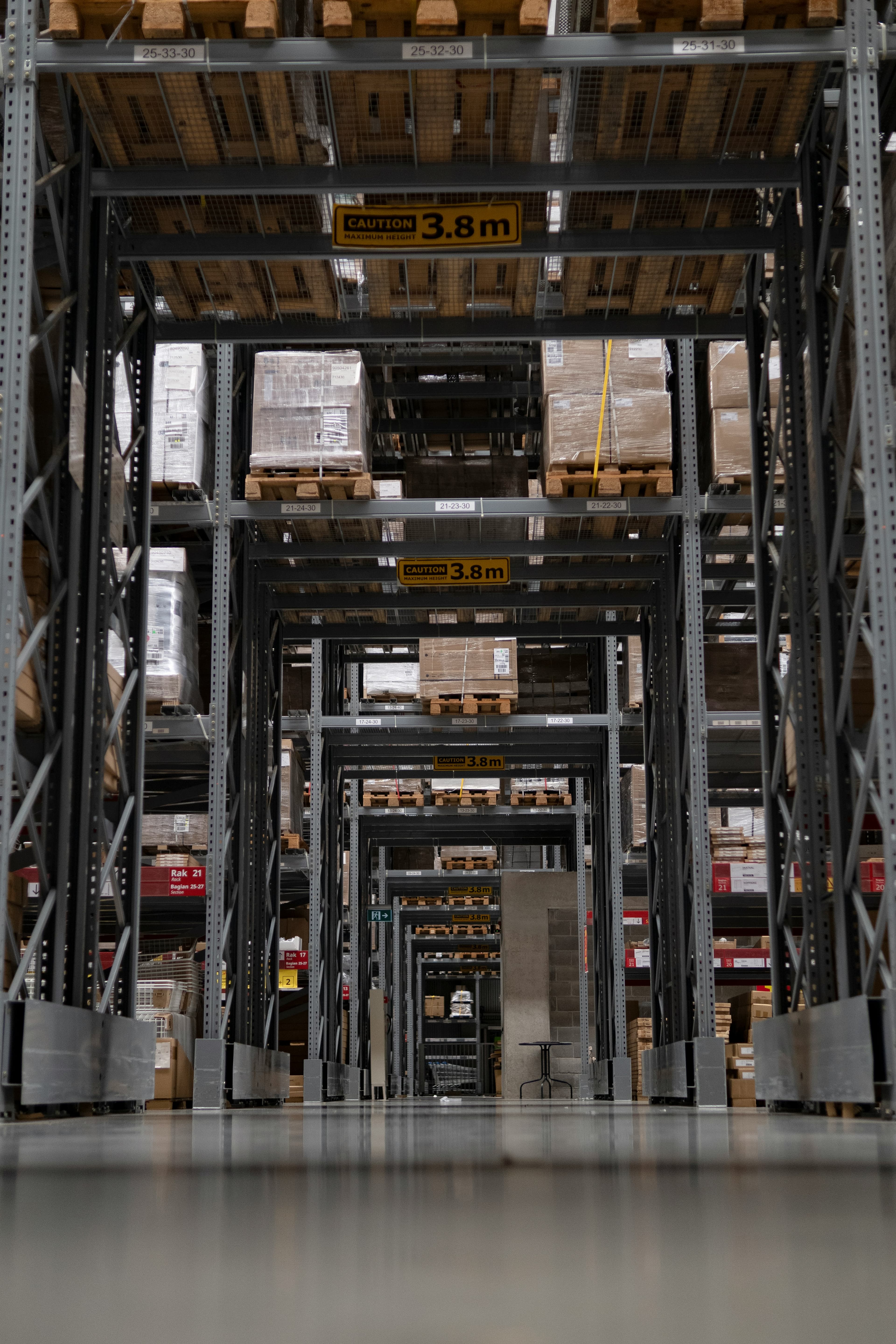
Quick Answer: EDI 850 is the purchase order — sent from retailer to vendor with line items, ship-to DC, and requested delivery dates. EDI 856 is the Advance Shipping Notice (ASN) — sent from vendor to retailer before shipment with carton-level detail and SSCC labels. EDI 810 is the invoice — sent from vendor to retailer billing for shipped goods. These three transactions run retail B2B commerce. Late or inaccurate transmission triggers chargebacks. See EDI integration services for full B2B EDI capabilities.
EDI (Electronic Data Interchange) is the protocol that runs retail B2B commerce. Walmart, Target, Costco, Amazon Vendor Central, Kroger, and every major retailer require EDI for purchase orders, ASNs, invoices, and inventory updates. Without proper EDI integration, you can't be a retail vendor at scale.
For brands new to retail fulfillment, EDI feels like a black box of cryptic numeric codes. This guide explains the three transactions that matter most — EDI 850, 856, and 810 — what they contain, how they flow between trading partners, and why getting them right is the difference between profitable retail vendor operations and chargeback-fueled losses.
The Big Picture: How EDI Flows in Retail Fulfillment
Before diving into specific transactions, understand the overall flow. A typical retail vendor relationship runs like this:
- Retailer sends EDI 850 (Purchase Order) to vendor with line items and requested delivery
- Vendor sends EDI 855 (PO Acknowledgment) confirming receipt and committing to ship (optional but common)
- Vendor ships goods to retailer DC per routing guide
- Vendor sends EDI 856 (ASN) to retailer before delivery with carton-level detail
- Goods arrive at retailer DC, are scanned against ASN, and put away
- Vendor sends EDI 810 (Invoice) to retailer billing for shipped goods
- Retailer pays invoice (typically Net 60 or per contracted terms)
Each of these transactions has specific X12 standard formats, retailer-specific implementation requirements, and timing rules. The most operationally critical are 850, 856, and 810. The rest support these or handle edge cases.
EDI 850: Purchase Order
The EDI 850 is the purchase order — the foundational document that starts the entire retail fulfillment workflow. Sent from retailer to vendor, it contains everything the vendor needs to fulfill the order.
What's In an EDI 850
A standard EDI 850 contains:
- PO header — PO number, PO date, PO type (regular, replenishment, promo, etc.)
- Buyer details — retailer name, buyer's department, buyer contact
- Ship-to information — destination DC (or store for direct-to-store delivery), ship-to address, delivery instructions
- Bill-to information — billing address (usually a corporate location, not the DC)
- Requested delivery window — date range when shipment should arrive at DC
- MABD (Must Arrive By Date) — hard deadline for delivery
- Line items — for each SKU: vendor item number, retailer item number (UPC/GTIN), quantity ordered, unit price, pack size
- Routing instructions — which carrier to use, freight terms (prepaid/collect), special handling instructions
- Special instructions — retailer-specific notes (allowances, terms, override conditions)
For a typical retailer PO, you're looking at a structured document with 20-100 data elements. Some retailers (Costco, in particular) keep POs simple with few SKUs and high quantities. Others (Target, Walmart) have POs with dozens of SKUs and complex routing.
How EDI 850 Flows
The retailer's procurement or replenishment system generates POs based on inventory needs. POs flow through the retailer's EDI gateway (e.g., Walmart Retail Link or Target Partners Online) to the EDI VAN (e.g., SPS Commerce, TrueCommerce). The VAN delivers the EDI 850 to the vendor's trading partner mailbox where the vendor's WMS or order management system picks it up and processes it.
From PO receipt, the vendor has the delivery window to: validate the PO against inventory availability, allocate inventory, build the pick plan, prepare for shipment, and execute outbound. The clock starts ticking from PO receipt.
What Goes Wrong with EDI 850
The most common EDI 850 issues:
- PO not received — VAN connection issue, trading partner profile misconfiguration, or retailer transmission failure. Vendor doesn't know they have a PO until follow-up.
- PO parsed incorrectly — vendor WMS doesn't handle a specific retailer's format properly, line items get truncated, or special instructions are missed.
- Inventory mismatch — vendor doesn't have inventory to fulfill the PO and doesn't realize until pick time.
- Routing not followed — vendor ignores routing instructions and uses different carrier, triggering routing guide chargebacks.
Reliable EDI 850 processing — receipt, parsing, validation, allocation — is the foundation of retail vendor operations. Mistakes here cascade through every other transaction.
EDI 856: Advance Shipping Notice (ASN)
The EDI 856 is the Advance Shipping Notice — the most operationally critical EDI transaction for retail fulfillment, and the source of most retail vendor chargebacks. Sent from vendor to retailer before delivery, the 856 tells the retailer exactly what's coming and how it's packed.
What's In an EDI 856
An EDI 856 contains pack hierarchy data — a structured representation of how cartons are arranged on pallets and what's inside each carton. Key data elements:
- Shipment header — shipment ID, ship date, carrier, BOL number, expected delivery date
- Ship-from / ship-to — vendor location, destination DC
- Pack hierarchy:
- Shipment level: total cartons, total pallets, total weight, total cube
- Pallet level (Tare): SSCC-18 pallet license plate, pallet ID, pallet pack pattern
- Carton level (Pack): SSCC-18 carton license plate, carton number, carton contents
- Item level (Item): retailer item number (UPC/GTIN), vendor item number, quantity per carton, lot codes, expiration dates
- PO reference — which PO(s) this shipment fulfills
The pack hierarchy is hierarchical — pallet contains cartons, carton contains items. SSCC-18 (Serial Shipping Container Code) license plates are 18-digit unique identifiers that tie physical GS1-128 labels to ASN data. When the carton arrives at the retailer DC and is scanned, the SSCC matches to the ASN and the receiving system knows exactly what's in the carton.
How EDI 856 Flows
The vendor generates the 856 at the moment of shipment — ideally from actual pick and pack scan data, not estimates. The 856 transmits through the EDI VAN to the retailer's trading partner system. Critical timing requirement: the 856 must transmit before the physical shipment arrives at the retailer DC. Some retailers require transmission within hours of physical pickup; others allow until end-of-day on ship date.
The retailer's receiving system uses the 856 for: dock scheduling, labor planning, put-away routing, inventory pre-allocation, and exception management. When the truck arrives, receivers scan GS1-128 labels and the system matches scans to the 856 to confirm what arrived.
What Goes Wrong with EDI 856
The 856 is the primary source of retail vendor chargebacks:
- Late ASN — transmission after physical delivery. Typical chargeback: 3% of invoice value.
- Missing ASN — never transmitted. Higher chargeback plus operational impact at retailer.
- Inaccurate ASN data — carton count mismatch, wrong UPCs, incorrect quantities, missing SSCC labels.
- Incorrect pack hierarchy — pallet/carton/item structure doesn't match physical reality.
- SSCC mismatches — physical GS1-128 label doesn't match ASN-referenced SSCC.
The fundamental rule: ASN data must match the physical shipment exactly. If the truck arrives with 50 cartons and the ASN says 48, that's a chargeback. If the SSCC label on a carton doesn't match anything in the ASN, that's a chargeback. The 856 has zero tolerance for inaccuracy.
The best 856 practice: generate the 856 from actual pick/pack scan events rather than estimates. This eliminates the most common failure mode — the ASN reflects what was supposed to ship, not what actually shipped. Our EDI integration service generates 856s from real scan data, eliminating estimation errors.
EDI 810: Invoice
The EDI 810 is the invoice — sent from vendor to retailer billing for shipped goods. Critical for cash flow but operationally simpler than the 850 or 856 because it follows them in the workflow.
What's In an EDI 810
A standard EDI 810 contains:
- Invoice header — invoice number, invoice date, PO reference, ship date, BOL number
- Bill-to / remit-to — where invoice should go (corporate) and where payment should be sent
- Line items — for each SKU shipped: vendor item, retailer item (UPC/GTIN), quantity shipped, unit price, line total
- Charges and allowances — freight charges, promotional allowances, term discounts
- Totals — subtotal, taxes, total invoice amount
- Payment terms — net days, discount terms (e.g., 2/10 Net 60)
The 810 must reference the original PO and match the ASN data exactly. If the ASN said 100 cartons of SKU-123 shipped, the 810 must bill for exactly 100 cartons of SKU-123. Mismatches trigger payment delays or short-pays.
How EDI 810 Flows
The vendor generates the 810 typically same-day or within 1-3 days after shipment. Transmission through EDI VAN to retailer's accounts payable system. Retailer's AP system reconciles the 810 against the PO and ASN data, identifies any discrepancies, holds for review if needed, and approves for payment per the contracted terms.
What Goes Wrong with EDI 810
The most common 810 issues:
- Data mismatches — invoice quantities don't match ASN; line item totals don't tie to header total.
- Wrong pricing — invoice uses incorrect unit prices (often from outdated price catalogs).
- Missing allowances — vendor doesn't apply contracted allowances or promotional discounts.
- Late invoicing — invoice transmitted late, delaying payment.
- Duplicate invoicing — same shipment invoiced twice (system error).
810 problems typically don't trigger chargebacks but they do delay payment. For brands operating on tight cash flow, payment delays caused by 810 errors are material.
The Supporting Cast: 855, 940, 944, 945, 753, 754
Beyond the big three, several other EDI transactions support retail fulfillment workflows:
- EDI 855 (PO Acknowledgment) — Outbound from vendor to retailer. Confirms PO receipt, can accept/reject line items, propose changes. Optional but increasingly required by major retailers.
- EDI 940 (Warehouse Shipping Order) — Used when retailer or client instructs 3PL warehouse to ship goods. Functions like a 850 internally to the warehouse.
- EDI 944 (Warehouse Stock Transfer Receipt Advice) — Outbound from warehouse confirming inbound receipt with counts and condition.
- EDI 945 (Warehouse Shipping Advice) — Outbound from warehouse confirming shipment occurred with carton-level detail. Often triggers the 856 generation.
- EDI 753 (Routing Request) — Vendor requests routing instructions from retailer for collect freight shipments.
- EDI 754 (Routing Confirmation) — Retailer confirms routing assignment with carrier details.
- EDI 947 (Inventory Adjustment Advice) — Outbound from warehouse reporting inventory adjustments (counts, damage, cycle counts).
A full B2B retail vendor operation may use all of these. The most critical for getting started are 850, 856, and 810. The rest can be added as the relationship matures.
EDI Versions: X12 v4010 vs v5010
You'll hear references to X12 v4010 and v5010. Both are standard versions of the X12 EDI protocol. Most retailers still use v4010 for retail vendor transactions; healthcare and some newer integrations use v5010. The differences are mostly under-the-hood structural improvements. For practical purposes, your EDI VAN handles version conversion if needed — you don't typically need to worry about it as the vendor.
VAN Options: SPS Commerce, TrueCommerce, Direct AS2/SFTP
EDI transmission happens through an EDI Value-Added Network (VAN) or direct AS2/SFTP connection:
- SPS Commerce — Most common EDI VAN. Used by 100,000+ retailers globally. Pre-built connections to major retailers. Subscription pricing ranges $200-$500/month for basic plans.
- TrueCommerce — Alternative VAN with strong grocery and consumer goods coverage. Used by vendors with significant Kroger, Wegmans, HEB exposure.
- Direct AS2/SFTP — Direct connection to retailer trading partner gateway without intermediate VAN. Lower per-transaction cost at high volumes but requires technical infrastructure to maintain.
For most brands starting in retail, SPS Commerce is the default choice due to broad retailer coverage. Larger high-volume vendors sometimes graduate to direct connections.
Why EDI Competency Matters
EDI implementation isn't optional for retail vendors — it's table stakes. But there's an enormous gap between "we have EDI" and "we run EDI well." The gap shows up in chargeback rates.
Bad EDI operations run 3-5% chargeback rates. Good EDI operations run under 1%. For a $5M annual Walmart vendor, that's the difference between $50K and $250K in annual chargebacks. Over a few years, it's the difference between profit and loss.
The factors that separate good from bad EDI operations:
- Automated ASN generation from actual scan events (not estimates) eliminates the most common error class
- Pre-shipment validation catches errors before truck leaves dock
- Real-time monitoring of trading partner connections to catch transmission failures
- Dedicated retail compliance team monitoring scorecards across all retailers
- Routing guide library maintained for current retailer specifications
- Multi-retailer experience handling distinct EDI implementations per retailer
At 3PLGuys, EDI competency is built into our standard B2B fulfillment operations. We integrate with Walmart, Target, Costco, Amazon Vendor Central, Kroger, and most regional retailers via SPS Commerce, TrueCommerce, or direct AS2/SFTP.
Frequently Asked Questions
What does X12 mean in EDI?
X12 is the standard EDI protocol used in North America. ANSI X12 defines specific transaction formats (850, 856, 810, etc.) with structured data segments. Other regions use different standards — EDIFACT in Europe, TRADACOMS in UK. X12 is universal for US retail B2B commerce.
How long does EDI integration take to set up?
Standard EDI integration with an established retailer (Walmart, Target, Costco, Amazon Vendor Central) takes 2-4 weeks: trading partner profile setup (week 1), QA environment testing (week 2), production cutover with parallel monitoring (week 3-4). New retailers may take 4-6 weeks.
Do I need to know EDI as a brand owner?
You don't need to know the technical details of EDI transaction formats. You do need to understand: which retailers require EDI for fulfillment, what your obligations are (timing, accuracy), what chargebacks happen and why, and how to evaluate your 3PL's EDI competency. The technical implementation is handled by your 3PL and EDI VAN.
What's the difference between an ASN and EDI 856?
There's no difference — they're the same thing. ASN (Advance Shipping Notice) is the business term; EDI 856 is the technical X12 transaction that implements it. Same document.
Why do retailers charge for late ASNs?
Retailers use ASN data to plan receiving operations — dock scheduling, labor allocation, put-away routing. Late or missing ASNs disrupt these plans, causing operational inefficiency at the retailer DC. The chargeback (typically 3% of invoice value) compensates for that disruption.
Can EDI errors be disputed?
Yes. Most retailers have dispute processes for chargebacks. To win disputes you need: timestamp evidence of transmission, photo documentation of physical shipment, accurate records of what was sent when, and clear demonstration that the retailer's claim is incorrect. Documentation discipline matters — disputes without evidence usually fail.
What's an SSCC and why does it matter?
SSCC (Serial Shipping Container Code) is an 18-digit unique identifier used in GS1-128 barcodes to identify shipping cartons and pallets. SSCCs link physical labels to ASN data — when a carton is scanned at the retailer DC, the SSCC matches to the ASN and the receiver knows exactly what's in the carton. SSCC mismatches between physical labels and ASN data are a common chargeback cause.